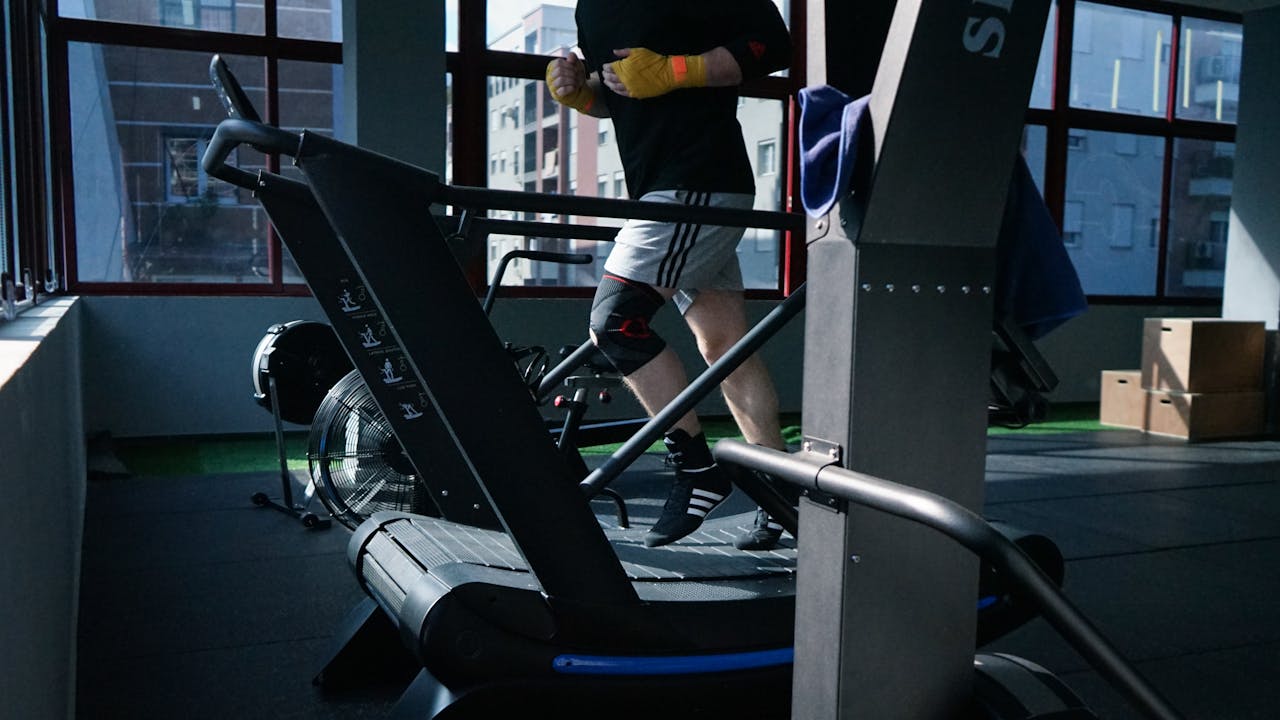
When Training Suddenly Feels Empty
There is a moment many active people hesitate to talk about. The workouts are still happening. The routine is intact. The body shows progress, or at least maintenance. From the outside, everything looks disciplined, healthy, functional. Yet inside, something has shifted. Training no longer brings relief. The familiar sense of reward is gone. What once felt grounding now feels strangely hollow.
This experience is more common than most fitness narratives admit. It does not announce itself dramatically. There is no collapse, no visible breakdown, no sudden inability to function. Instead, there is a quiet emotional flattening. A sense that effort continues, but meaning has slipped away. For many athletes and gym-goers, this is confusing precisely because movement has always been their anchor.
Fitness culture rarely makes space for this contradiction. Strength is expected to stabilize everything. Training is supposed to regulate stress, sharpen mood, and keep the mind resilient. When that equation stops working, people often assume the failure lies with them. They train harder, optimize more aggressively, or look for the next supplement, routine, or motivational trigger. But emptiness during training is not a motivation problem. It is a signal.
Exercise Regulates Stress – Until It Doesn’t
From a physiological perspective, movement is one of the most powerful tools for regulating the nervous system. Regular physical activity improves sleep quality, increases stress tolerance, and supports neurotransmitter balance. These effects are well established. Yet they are not infinite.
Training primarily works by challenging the body and allowing it to recover. That recovery phase is where adaptation happens. When stress outside the gym becomes chronic – emotional strain, financial pressure, relational instability, social isolation – the nervous system may never fully downshift. In that state, exercise can lose its regulating effect. What once calmed the system may simply add another controlled stressor on top of an already overloaded baseline.
This does not mean training becomes harmful. It means it stops compensating. For individuals who rely on exercise as their primary emotional regulator, this shift can feel deeply unsettling. The workout still “works” mechanically, but it no longer restores balance. The body keeps moving forward while the internal sense of coherence fades.
Not All Depressive States Look the Same
When people hear the word depression, they often imagine visible dysfunction: withdrawal, inability to get out of bed, loss of productivity. Yet many depressive states do not look like this at all. Especially among high-functioning, disciplined individuals, emotional numbness can coexist with performance.
This is why athletes and regular gym members sometimes struggle to recognize what is happening. They are still training. Still showing up. Still “doing the right things.” But enjoyment is absent. Pride feels muted. Progress no longer carries emotional weight. This state is often described clinically as anhedonia – the reduced ability to feel pleasure – and it can occur without a full depressive disorder.
Labeling matters less than understanding the mechanism. Emotional flattening is not a moral failure. It is not a lack of gratitude or mental toughness. It is frequently the result of prolonged nervous system strain combined with unmet psychological needs.
The Limits of Individual Responsibility
Modern fitness culture places enormous emphasis on personal responsibility. Train consistently. Optimize nutrition. Track recovery. Improve sleep. These are valuable principles, but they can quietly reinforce a dangerous assumption: that well-being is entirely self-engineered.
In reality, mental health does not exist in a vacuum. Social stability, economic security, and relational safety all shape nervous system regulation. When these foundations erode, individuals often internalize the strain as a personal weakness. This is especially true in cultures that prize productivity and self-optimization.
In some countries, emotional distress is addressed quickly with medication. In others, it is moralized or minimized. Neither extreme captures the full picture. Medication can be life-saving for many people, but it is not a substitute for connection, meaning, or structural support. Fitness alone cannot replace those either.
The question is not whether individuals should “try harder.” The question is what kind of environment they are trying to survive in.
Why Fitness Spaces Matter More Than We Admit
One of the most underestimated aspects of gyms is their social function. Fitness studios are among the few remaining places where people gather physically without a transactional agenda. No profile matching. No algorithmic filtering. Just shared routines, repeated encounters, and quiet recognition.
For many people, especially those living alone or working in isolated roles, the gym provides a form of low-threshold social contact. Familiar faces. Small conversations. Nonverbal acknowledgment. These micro-connections matter more than motivational slogans ever will.
Epidemiological research consistently links loneliness to increased risk of depression, anxiety, and physical illness. Exercise helps, but isolation undermines its effect. Training in a social environment does not cure loneliness, but it can soften its edges. When that social layer disappears – through withdrawal, schedule changes, or emotional shutdown – the protective effect of fitness weakens.
Why Sport Helps – And Why It Sometimes Isn’t Enough
There is strong evidence that regular physical activity reduces depressive symptoms in many populations. Exercise influences neurotransmitters, improves sleep architecture, and supports cognitive resilience. These benefits are real and measurable.
However, exercise does not directly address emotional neglect, unresolved relational loss, or chronic insecurity. It cannot replace attunement. It cannot substitute for being seen, heard, or emotionally mirrored by another person. When sport becomes the only coping mechanism, its limits eventually show.
This is particularly relevant for men and performance-oriented individuals, who are often socialized to regulate emotions through action rather than expression. Training becomes the language through which distress is processed. When that language stops translating into relief, confusion follows.
Athletes, Emotional Silence, and Invisible Risk
Some of the highest-functioning individuals carry the heaviest emotional loads. They continue to train, work, and perform while internal resources quietly erode. This is not weakness. It is adaptation taken too far.
Research shows that functional stability does not protect against severe psychological crises. In some cases, it delays recognition. Warning signs are subtle: emotional detachment, irritability, loss of intrinsic motivation, rigid routines that feel compulsory rather than chosen.
When training becomes the last remaining regulator rather than one of several, that is not strength. It is fragility disguised as discipline.
Integration Instead of Replacement
Fitness remains a powerful ally for mental health. The solution is not to abandon training, but to stop asking it to carry responsibilities it was never designed to hold alone. Movement supports regulation. It does not create meaning by itself.
Meaning emerges through connection, purpose, and resonance. Through relationships that respond. Through environments that allow rest without guilt. Through systems that acknowledge human limits.
When training feels empty, it may be time to widen the lens rather than intensify the routine. To ask not “What should I optimize next?” but “What is missing that movement cannot provide?”
Strength is not the absence of need. It is the capacity to recognize it. And sometimes, the most honest form of fitness is not pushing harder, but allowing space for what the body has been carrying in silence.