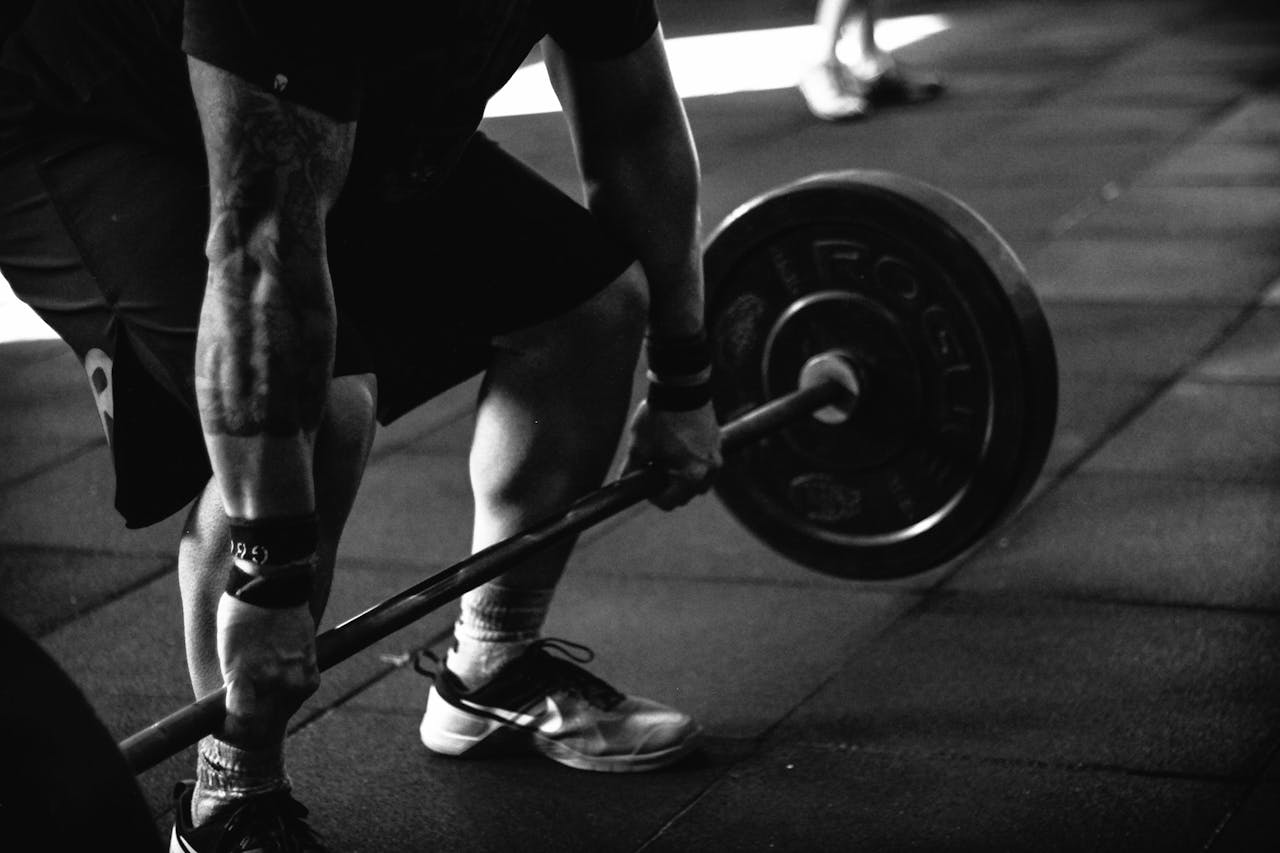
There is a quiet moment most people over 40 recognize but rarely articulate. The workout itself feels manageable. The weights move. The run gets done. The sweat is there. But the next day feels different. Heavier. Slower. Less resolved. Muscles stay tight longer. Energy doesn’t fully return. Motivation dips unexpectedly. What used to feel like normal fatigue now lingers. This isn’t weakness. It isn’t laziness. And it certainly isn’t a lack of discipline. It is biology adjusting the rules of adaptation.
In our previous article, The Midlife Training Trap: Why Training Like You’re 25 Backfires After 40, we explained why the old assumption that “more effort equals more progress” stops working in midlife. The problem is not that you’ve lost drive. The problem is that recovery—not effort—has become the limiting factor. Article 1 addressed the mindset shift. Article 2 explains the physiological reality behind it.
Training Is Stress. Recovery Is Adaptation.
Training itself does not make you stronger. Training creates stress. That stress signals the body to adapt. But the adaptation process only occurs if the body has the capacity to repair and rebuild. After 40, that repair timeline extends. Muscle protein synthesis still happens. Strength gains are still possible. Cardiovascular improvements still occur. But the cost per session is higher. The margin for insufficient recovery becomes smaller. When stress accumulates faster than recovery capacity, progress stalls—even if effort increases.
The Nervous System: The Hidden Limiter
Most people focus on muscles when they think about recovery. But the central nervous system is the true governor of performance. Every lift, sprint, and explosive movement relies on neural coordination and signal efficiency. Neural fatigue doesn’t feel like muscle soreness. It feels like reduced drive, slower reaction time, decreased explosiveness, and subtle coordination decline. After 40, neural recovery slows slightly. If training frequency remains high while life stress increases, the nervous system becomes chronically taxed. The result is flat performance curves, even when muscular capacity remains intact.
Inflammation Lasts Longer Than You Think
Training causes micro-damage. That damage triggers inflammation. Inflammation is necessary—it initiates repair. But inflammation must resolve for adaptation to complete. Research shows that inflammatory responses tend to persist longer with age. That does not mean inflammation becomes pathological. It means the recovery window lengthens. Training again before inflammation resolves can stack fatigue instead of building capacity. This is why back-to-back high-intensity days that felt manageable at 28 often feel unsustainable at 45.
Sleep Becomes a Performance Multiplier
Deep sleep drives recovery hormones such as growth hormone and supports neural repair processes. Yet sleep architecture changes with age. Even minor reductions in deep sleep significantly affect recovery capacity. Many midlife athletes unknowingly train beyond their sleep quality. They maintain intensity while their recovery infrastructure weakens. Improving sleep often produces greater performance gains than increasing volume. The irony is clear: the strongest midlife athletes are often those who protect sleep with the same discipline they once applied to workouts.
Connective Tissue Adapts More Slowly
Muscle may feel ready before tendons are. Collagen turnover decreases gradually with age. Tendons require longer recovery after heavy mechanical load. Sudden spikes in intensity or volume disproportionately strain connective tissue. Many common midlife injuries—Achilles issues, elbow tendonitis, shoulder irritation—are less about muscle weakness and more about tissue adaptation timelines being ignored. Intelligent load progression becomes essential.
Hormonal Signals Still Work—But They Require Balance
Contrary to popular belief, hormonal decline does not eliminate the ability to build strength. Testosterone, growth hormone, and anabolic signaling remain functional. However, they become more sensitive to chronic stress, poor sleep, and caloric restriction. High life stress combined with aggressive training suppresses recovery signals. The solution is rarely “train harder.” It is creating conditions that allow recovery hormones to operate efficiently.
The Recovery Budget Concept
Think of recovery as a budget. You have a limited capacity each week. Training draws from that account. So does work stress, poor sleep, emotional strain, and nutritional inconsistency. In your twenties, the account felt nearly unlimited. After 40, it becomes more defined. Overspending results in stagnation or injury. Smart programming respects the total load, not just the gym load.
Why Reducing Volume Often Improves Results
One of the most counterintuitive discoveries for midlife athletes is that slightly reducing weekly volume can improve strength and energy. This does not mean training less intensely. It means training more precisely. Fewer but higher-quality sessions, paired with adequate recovery, allow adaptation cycles to complete. Consistency across months outweighs intensity spikes across weeks.
The Psychological Shift
For many, the hardest part is emotional. Letting go of the belief that suffering equals progress feels like surrender. But adaptation is not emotional—it is physiological. Respecting recovery is not weakness. It is strategic maturity. The athletes who thrive after 40 are not those who ignore fatigue. They are those who understand it.
Recovery Is the New Competitive Advantage
After 40, performance is not about pushing harder. It is about aligning stress with repair capacity. Those who sleep well, manage stress, fuel properly, and program intelligently often outperform those who chase intensity without balance. The body is still capable. It simply negotiates differently. When recovery becomes intentional rather than accidental, progress resumes. Strength stabilizes. Energy improves. Training feels sustainable again.
The real shift is conceptual. Training is no longer about maximizing stress. It is about optimizing adaptation. Once that shift happens, frustration dissolves. The body responds—not because it is younger, but because it is finally respected.
As recovery becomes more important with age, one key question remains: how do you actually know when your body needs rest? Modern wearables provide data — but data alone isn’t enough. The next step is understanding it. In our recent article, AI is finally listening to what your body has been telling you all along, we explore how artificial intelligence is starting to interpret health and fitness data in a way that actually makes sense.
Sources
National Institutes of Health – Age-related differences in muscle protein synthesis
Sleep Foundation – Sleep and muscle recovery
Cleveland Clinic – Heart Rate Variability and recovery
American College of Sports Medicine – Overtraining and aging athletes
Harvard Medical School – Exercise, recovery and longevity