The fitness industry has become remarkably good at measuring things. Watches record heart rate, sleep and daily steps. Smart scales estimate body composition. Gym equipment tracks power and performance, while apps can tell us whether we have spent enough time in a particular heart-rate zone. What none of these numbers can do is turn a fitness professional into a healthcare provider.
That distinction is becoming more important rather than less. The people exercising in gyms, running outdoors or following strength programs at home are not a separate population from the people being treated for hypertension, type 2 diabetes, obesity, arthritis or cardiovascular disease. They are often exactly the same people. As exercise becomes more closely connected with prevention and the management of chronic conditions, fitness professionals and healthcare professionals increasingly find themselves looking at the same person from different perspectives. Understanding where those perspectives overlap – and where they must remain separate – may be one of the most important challenges for modern fitness.
A heart-rate reading is a number, not a diagnosis
A wearable showing an unusually high heart rate can be useful information. So can a blood-pressure reading taken before exercise. But information and diagnosis are two very different things. Imagine a 55-year-old man joining a gym after ten largely inactive years. He wants to lose weight and become fitter. During his first few sessions, his heart rate rises faster than he expected. Is he simply deconditioned? Is his medication affecting his response to exercise? Is there a medical issue that needs investigation?
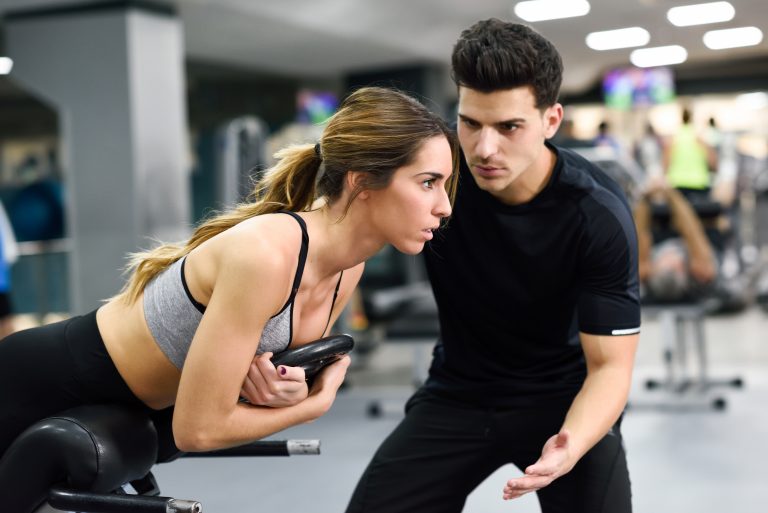
A trainer can observe, ask questions and adapt a workout. What the trainer should not do is diagnose the cause. This is one reason education matters increasingly at the boundary between fitness and healthcare. Registered nurses seeking greater clinical responsibility can pursue advanced education through options such as online BSN MSN programs, which combine graduate-level nursing education with clinical preparation for advanced practice roles.
Wilkes University, for example, offers MSN nurse practitioner pathways in family practice, psychiatric and mental health care, and adult-gerontology primary care, with coursework delivered online alongside required clinical experience. The relevance to fitness is not that trainers should become nurses. It is that the health questions surrounding exercise are becoming more complex.
The person in front of you matters more than the program
Fitness advice often becomes generalized because general advice is easy to communicate. Do resistance training. Walk more. Improve your cardiovascular fitness. Sit less. Maintain a healthy body weight. None of this is wrong. Regular physical activity is associated with substantial health benefits, including lower risks of heart disease, stroke and type 2 diabetes. It can improve blood pressure, support healthy aging and help people with a range of chronic conditions maintain function and independence.
But population-level recommendations are only the beginning of the conversation. The same training session can represent very different challenges for two people. Ten squats may be a warm-up for one person and a major functional achievement for another. Thirty minutes of brisk walking may be easy aerobic exercise for a healthy 30-year-old but a meaningful progression for someone recovering from prolonged inactivity.
Fitness becomes more useful when the program is adapted to the person rather than the person being forced into the program. Healthcare works on a similar principle. A diagnosis, medication list, age or body weight does not tell the whole story. The person’s daily life, physical capacity, previous health history and goals all matter. That shared focus on the individual is one of the places where fitness and healthcare can complement each other.
Chronic disease has already entered the gym
There was a time when commercial fitness advertising largely revolved around younger, healthy adults who wanted to look more athletic. Walk through many gyms today and the reality is broader. People train after joint replacements. They exercise with hypertension. They want to regain strength after illness. They have type 2 diabetes, arthritis or obesity. Some are trying to preserve muscle and balance as they age rather than preparing for a beach holiday.
This is good news. Physical activity should not be reserved for people who are already healthy and athletic, but the broader population using gyms also creates responsibility. The CDC guidance for adults with chronic health conditions emphasizes that regular physical activity can support cardiovascular health, muscle fitness, independence and daily function. At the same time, people with chronic conditions may need to discuss appropriate types and amounts of exercise with a healthcare professional or physical activity specialist. That is a much more useful message than either extreme: “You are ill, so do not exercise” or “Exercise fixes everything.”
Good fitness coaching sometimes means stopping
Fitness culture celebrates effort: one more repetition, one more kilometer, push a little harder. That mentality can produce progress, but it is not universally appropriate. A good coach should be able to distinguish between the discomfort that normally accompanies physical effort and signs that deserve more attention. Unusual chest discomfort, fainting, unexplained dizziness or symptoms suggesting cardiovascular, pulmonary or metabolic disease are not opportunities to demonstrate motivational skills. They are reasons to stop and consider whether medical evaluation is appropriate.
Professional exercise standards reflect this distinction. Preparticipation screening and recognition of major signs and symptoms form part of the knowledge expected of qualified exercise professionals. The point is not to turn a fitness assessment into a medical examination. It is to recognize when an exercise professional has reached the boundary of his or her role. Knowing that boundary is expertise, not weakness.
Healthcare has its own exercise problem
The gap does not exist only on the fitness side. “Exercise more” may be medically sound advice, but for a sedentary patient it is often remarkably vague. Does it mean walking? Running? Lifting weights? How hard? How often? What happens when the knees hurt? Is soreness after the first strength session normal? What should happen after three weeks when the initial enthusiasm disappears?
This is where fitness professionals can provide something that a short healthcare appointment often cannot: implementation. A recommendation becomes a real-world behavior. Walking for ten minutes becomes 20. A person who has not performed a squat for years learns to stand up from a chair with greater control. Resistance that initially feels difficult gradually becomes manageable. These changes may appear small compared with a medical intervention, but accumulated over months and years they can matter enormously.
The challenge is particularly important in a society where prolonged inactivity has become part of everyday life. Understanding why regular movement matters beyond the gym helps explain why a prescription to “be more active” has to become something practical before it can change health. The trainer’s strength is not diagnosing hypertension. It is helping someone turn the recommendation to become more active into something that actually happens on Tuesday morning.
Education matters because health rarely fits into one box
The old separation between fitness and healthcare was convenient. Fitness professionals dealt with exercise; healthcare professionals dealt with disease. Real people have never been that neatly organized. Someone can want bigger muscles while also having high blood pressure. A recreational runner can develop type 2 diabetes. A 70-year-old can begin strength training after decades without structured exercise. A person taking several medications can still want to improve cardiovascular fitness.
The challenge is not deciding whether these people belong in healthcare or fitness. They often belong in both. Advanced healthcare education reflects this complexity. Nurse practitioners, physicians, physiotherapists and other healthcare professionals increasingly work with conditions in which lifestyle, movement and long-term behavior matter alongside diagnosis and treatment. Fitness professionals, meanwhile, encounter clients whose health histories demand more judgment than simply choosing exercises. The solution is not to blur professional boundaries until everyone tries to do everything. It is to make those boundaries work better.
The best handover may be the most valuable thing a trainer does
There is an understandable temptation in every profession to provide the answer. Clients expect expertise, and saying “I don’t know” can feel uncomfortable. But there is a better version of that sentence: “This is something you should discuss with your healthcare professional before we continue.” That can be one of the most responsible decisions a trainer makes.
The reverse should also become more common. A healthcare professional who recommends resistance training does not need to become a strength coach. Referring a patient to an appropriately qualified exercise professional may help transform general advice into a sustainable program. Neither profession loses authority by involving the other. What matters is that the person receives the right expertise at the right moment.
Fitness will continue to become more sophisticated. We will measure more variables, collect more data and probably wear devices capable of tracking things that currently require dedicated equipment. Yet more information will not eliminate the need for professional judgment. The future of fitness may therefore depend not only on knowing more about exercise, but also on knowing when exercise is only one part of a much larger health story.
Sources
Centers for Disease Control and Prevention (CDC): Health Benefits of Physical Activity for Adults
Centers for Disease Control and Prevention (CDC): Chronic Conditions & Disabilities Activity
U.S. Department of Health and Human Services: Physical Activity Guidelines for Americans, 2nd Edition
American College of Sports Medicine (ACSM): ACSM Certified Exercise Physiologist – Exam Content Outline
Wilkes University: Master of Science in Nursing (MSN) – Nurse Practitioner