Exercise science can tell us a great deal about the human body. We know how muscles respond to resistance, how cardiovascular fitness develops and why progressive overload is important. We can measure heart rate, power, strength, mobility and body composition with increasing precision. Yet the moment this knowledge is applied to a real person, things become more complicated.
People do not arrive at a gym as textbook examples. They bring previous injuries, medications, chronic conditions, fears, expectations and sometimes symptoms they have never discussed with a healthcare professional. This is where theoretical knowledge meets practical experience – and where knowing what not to do can become just as important as knowing which exercise to prescribe.
The body does not always follow the lesson plan
A training program can look perfect on paper and still be wrong for the person standing in front of you. Imagine two clients of the same age beginning the same strength program. One progresses exactly as expected. The other becomes unusually exhausted, experiences dizziness or develops discomfort that does not resemble normal muscular fatigue. The exercises may be identical, but the situation is not.
Experience helps professionals recognize these differences. It teaches them to observe how people actually respond rather than simply following a predetermined plan. In fitness, this may mean reducing the intensity, changing an exercise or recommending that a client speak with a healthcare professional before continuing. In healthcare, practical experience serves an even broader purpose because clinical decisions involve assessment, diagnosis, treatment and the responsibility that comes with caring for real patients.
That distinction also helps explain why practical clinical experience is an essential component of advanced healthcare education. Nurses comparing nurse practitioner programs with clinical placement are not simply looking for another collection of online lectures. Clinical placements allow advanced nursing students to apply academic knowledge while working with real patients under professional supervision. Rockhurst University, for example, combines online nurse practitioner education with clinical hours and provides placement and preceptor support for its students.
A number becomes meaningful only in context
Modern fitness produces enormous amounts of data. A smartwatch can show that someone’s heart rate reached 165 beats per minute. A blood-pressure monitor can display a reading within seconds. A glucose sensor can reveal changes throughout the day. These measurements can be useful, but the number itself rarely tells the entire story.
A heart rate of 165 may be completely unremarkable during intense exercise for one person and unexpected for another. Blood pressure has to be considered in context, as do symptoms such as dizziness, unusual fatigue or shortness of breath. Even pain is complicated. The burning sensation of a hard set of squats is very different from sudden chest pain or an unfamiliar sharp pain in a joint.
The more health data becomes available outside traditional healthcare settings, the more important professional judgment becomes. Fitness professionals can use data to guide training, but they also need to understand the limits of what those numbers allow them to conclude. Collecting information is not the same as interpreting it clinically.
Fitness professionals see people when they are moving
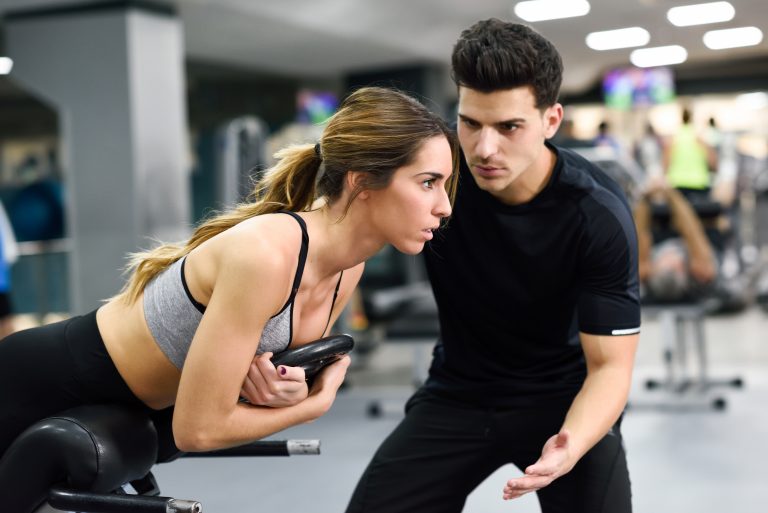
Healthcare professionals usually see patients in a consultation or clinical environment. Fitness professionals see something different: they see people under physical load. They notice how someone walks, bends, lifts, balances and responds when breathing and heart rate increase. They may observe changes that are not obvious when someone is sitting in a chair describing how they feel.
That does not give a trainer the authority to diagnose disease. It does, however, create an opportunity to notice when something does not look right. A client who suddenly performs far below their normal capacity, becomes unusually breathless or repeatedly loses balance may deserve more than encouragement to push through the session.
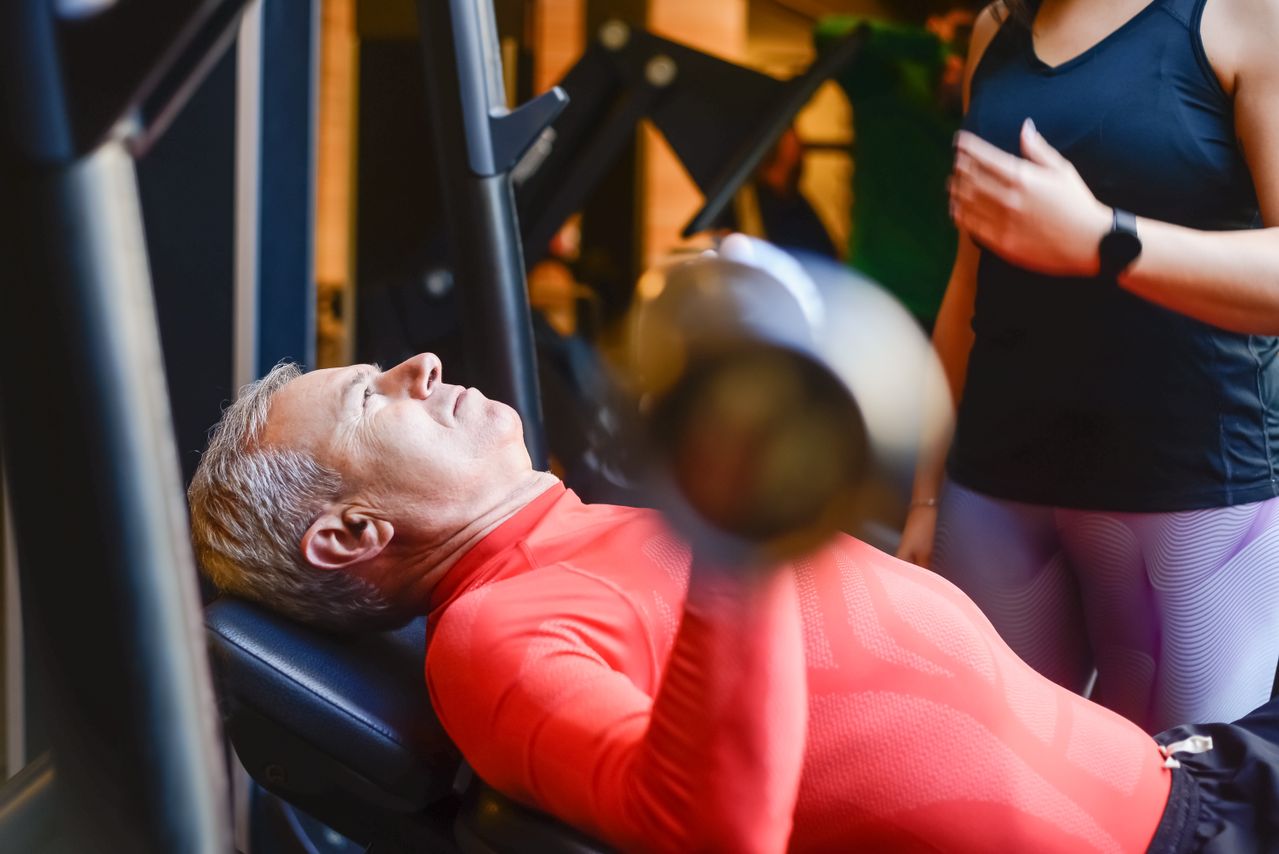
The ability to observe movement becomes particularly important as more adults continue exercising later in life. Our article on health and fitness after 50 looks at why exercise remains valuable as people age and why training increasingly has to reflect individual health, physical capacity and functional goals rather than simply athletic performance.
Chronic conditions have changed the fitness floor
The modern gym includes people with hypertension, arthritis, obesity, cardiovascular risk factors and type 2 diabetes. It includes cancer survivors, people returning after surgery and older adults who are trying to preserve enough strength to remain independent. Exercise is no longer something practiced only by people who consider themselves healthy.
That change is positive because physical activity can play an important role in maintaining health and function. The CDC guidance on physical activity for people with chronic health conditions and disabilities emphasizes that adults with chronic conditions can benefit from regular physical activity and that appropriate activity can support cardiovascular health, muscle fitness, daily function and independence.
But the presence of chronic disease also makes individualization more important. A generic program downloaded from the internet cannot account for every medication, symptom, previous injury or medical restriction. Fitness professionals therefore need enough knowledge to adapt exercise appropriately while recognizing when a question belongs in healthcare rather than the gym.
Experience also teaches when not to push harder
Fitness culture tends to celebrate persistence. Finish the set. Complete the workout. Do not quit because something feels difficult. In many situations that mentality is useful because physical adaptation requires effort, and beginners in particular have to learn that exertion is not automatically dangerous.
The problem begins when every uncomfortable sensation is interpreted as something to overcome. Practical experience teaches professionals to distinguish ordinary exertion from warning signs. It also teaches them that stopping a session can sometimes be the most professional decision they make.
The same principle applies in healthcare. Knowing the theory behind a condition is essential, but working with real patients develops another layer of judgment. Symptoms overlap, people describe sensations differently and several health problems may exist simultaneously. Practical experience exposes professionals to the variability that cannot be reproduced completely in a textbook or online lecture.
The patient and the fitness client may be the same person
We often talk about “patients” and “fitness clients” as though they were two separate populations. In reality, the same person may visit a healthcare professional in the morning and go to the gym that evening. Someone being treated for hypertension may also be training for a cycling event. A person with arthritis may be trying to improve leg strength. Someone with type 2 diabetes may begin exercising specifically because a healthcare professional recommended it.
This overlap is one reason communication between healthcare and fitness matters. The goal is not to erase professional boundaries. Trainers do not need to diagnose disease, and healthcare professionals do not need to design every detail of a strength program. Each profession contributes something different.
The fitness professional may understand how the person actually responds during exercise and what prevents them from following a program consistently. The healthcare professional can assess symptoms, medical history and clinical risk. When those perspectives complement rather than compete with each other, the person receives better support.
Real people make education more complicated – and more useful
Theory tends to present problems individually. In real life, they arrive together. An older adult may have high blood pressure, knee pain, reduced balance and anxiety about falling. A middle-aged client may be overweight, take several medications and have spent years avoiding exercise because previous attempts left them exhausted and discouraged.
There is rarely one perfect intervention. A successful approach may require medical assessment, gradual exercise progression, realistic expectations and repeated adjustments as the person becomes fitter or their health changes. That complexity is precisely why practical education matters.
Clinical placements expose future healthcare professionals to patients who do not behave like examples in a lecture. Supervised experience gives students the opportunity to connect academic knowledge with communication, observation and clinical decision-making. Fitness professionals develop a comparable form of practical judgment through supervised education, coaching experience and repeated exposure to people with different abilities and limitations.
The best professionals become better observers
Expertise is sometimes imagined as having an immediate answer to every question. In practice, experienced professionals often become better at noticing what deserves another question. They recognize changes in movement, performance or behavior. They listen when someone says that something feels different. They understand that an unexpected response may be more important than completing the planned workout.
This kind of observation matters because exercise places the body under stress. Usually that stress is exactly what produces adaptation. Heart rate rises, breathing becomes harder and muscles fatigue. But because exercise deliberately challenges the body, it can also reveal limitations that are less obvious during everyday activities.
The goal is not to make fitness professionals afraid of challenging their clients or to medicalize every workout. It is to develop enough judgment to understand the difference between productive training stress and a situation that deserves further attention.
As fitness and healthcare increasingly overlap, practical experience becomes more valuable on both sides. Healthcare professionals need to understand how health recommendations translate into the realities of daily life, while fitness professionals need to recognize that the people they train may have medical histories that affect exercise.
The strongest connection between the two fields may therefore be surprisingly simple: both depend on understanding the person rather than merely knowing the theory. A textbook can explain what should happen. Data can show what is happening. Practical experience helps a professional recognize when the difference between the two actually matters.
Sources
Centers for Disease Control and Prevention (CDC): Health Benefits of Physical Activity for Adults
Centers for Disease Control and Prevention (CDC): Chronic Conditions & Disabilities Activity
Rockhurst University: Online Nurse Practitioner and Nursing Programs
Rockhurst University: Clinical Placement Services
Rockhurst University: Online Family Nurse Practitioner (FNP) Programs