 Français
 Deutsch
 Español
 Fitness

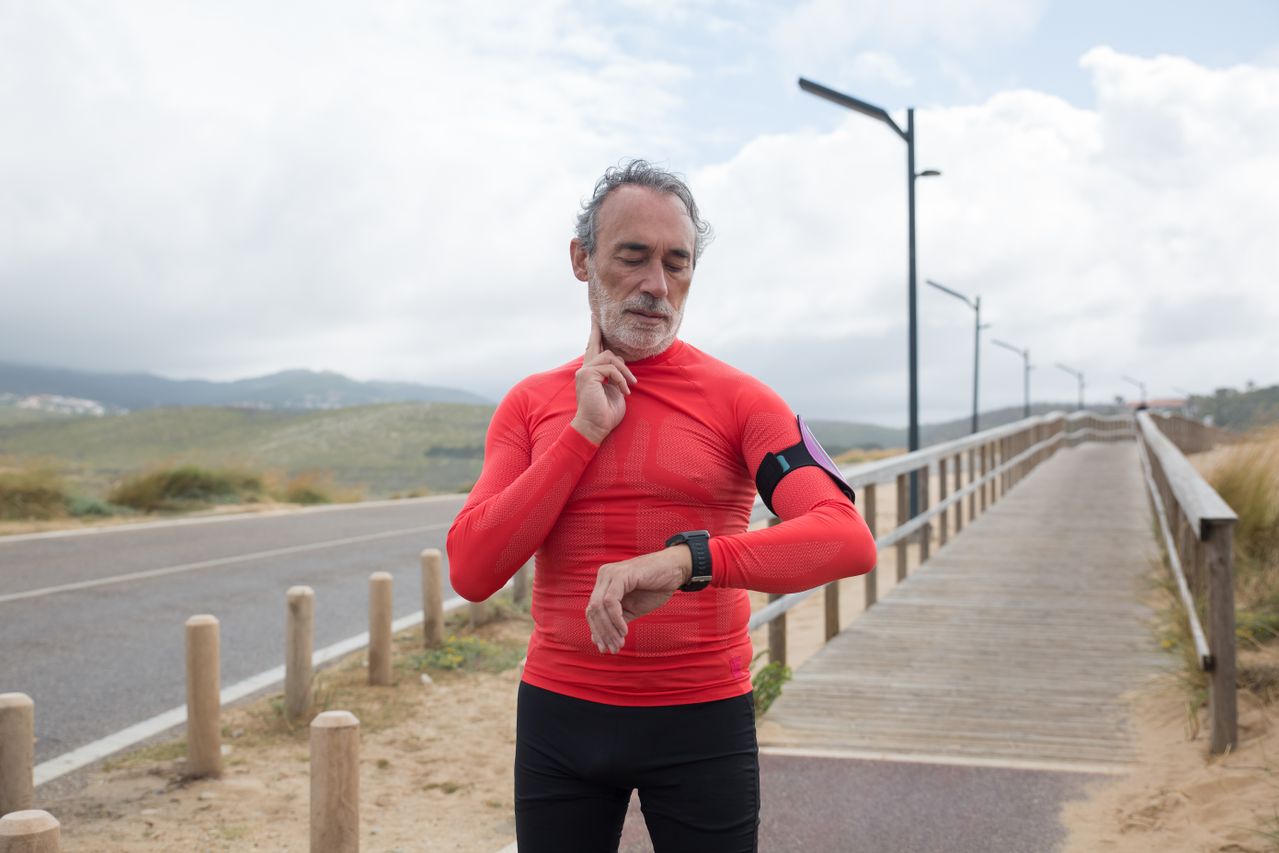
Years ago, I remember being told that endurance training worked a little like a savings account. Every mile you ran, every hour you spent cycling or swimming was another deposit. Even if you stopped exercising for years, some of those early investments would supposedly still pay dividends when you grew older. I always liked that idea. Not least because it suggested that all those sweaty miles were not entirely wasted, even if life eventually got in the way. But was it actually true? Could someone who ran regularly at 25 still have a biological advantage when returning to exercise at 65 or 70?
Or was the body's supposed savings account simply a comforting story told by coaches who wanted us to keep training? Modern research into cardiovascular adaptations, muscle memory and epigenetics gives us an opportunity to revisit that old idea. And the answer is more interesting than a simple yes or no.
The Fitness Savings Account: A Beautiful Idea With a Problem
The savings-account metaphor suggests that exercise creates something permanent. Train hard while you are young, accumulate physical capital and enjoy the returns decades later. Unfortunately, human physiology does not work quite like a bank. Training adaptations require continued stimulation. When that stimulation disappears, the body gradually reduces its investment in maintaining them. Blood volume decreases, cardiovascular efficiency changes and muscles lose some of the adaptations that made endurance exercise easier.
A systematic review and meta-analysis published in 2022 examined 21 studies and found significant reductions in maximal oxygen uptake, or VO2max, following both short- and long-term training cessation. Longer interruptions generally produced greater losses. That is hardly surprising. The body is remarkably economical. It does not maintain expensive physiological machinery indefinitely when nobody seems interested in using it.
What Happens to Your Endurance When You Stop Training?
VO2max measures the maximum rate at which the body can use oxygen during intense exercise. It reflects the combined performance of the cardiovascular system, lungs, blood and working muscles. Endurance training can improve this capacity considerably. But the gains are not permanently protected. When training stops, plasma volume may decline relatively quickly. Over longer periods, changes in cardiac function, mitochondrial activity and muscular oxidative capacity contribute to further deterioration.
Researchers studying masters endurance athletes have found that reducing or stopping training can accelerate the decline in VO2max beyond what would be expected from aging alone. Their 2022 review also emphasizes the importance of maintaining training volume. Someone who exercised regularly throughout adulthood is therefore in a different situation from someone who trained intensely at 25 and then stopped completely for 40 years. The first person has continued making deposits. The second has been withdrawing from the account for decades.
THE BODY'S FITNESS SAVINGS ACCOUNT
What might happen to a lifetime of training?
25
MAKING DEPOSITS
Regular endurance and strength training build cardiovascular capacity, muscular adaptations and movement skills.
40–65
THE LONG PAUSE
Fitness declines without training. Some previously acquired biological adaptations may leave longer-lasting traces.
70
RETURNING TO TRAINING
The body responds again. Previous experience may help, but a decades-long biological advantage is not established.
70+
NEW DEPOSITS
Progressive training can improve strength, endurance and everyday physical function, even when started late.
Conceptual illustration only. Ages are illustrative, not study measurements. The duration and magnitude of any retained training advantage remain uncertain.
Your fitness account may lose value. But it is never too late to start depositing again.
Does the Cardiovascular System Remember Its Former Fitness?
There is an important distinction between retaining fitness and regaining it. A former endurance athlete may lose much of their aerobic capacity during inactivity but still respond effectively when training resumes. Some adaptations can recover within weeks or months, depending on the person's age, health, previous training history and length of the interruption. A 2024 case study involving a masters triathlete found that 12 weeks of structured retraining restored much of the cardiorespiratory fitness lost during a 12-week break. However, running economy and lean mass did not fully recover during that period. This is encouraging, but it does not answer our original question about a 40-year interruption. A few months away from training and four decades away from training are very different experiments. Researchers have far more evidence about relatively short periods of detraining than about the lifelong consequences of exercising intensely in youth and remaining inactive until retirement.
Muscle Memory: A Different Kind of Savings Account
Strength training introduces another possibility. People who previously developed substantial muscle mass often appear capable of rebuilding it more efficiently after a period of inactivity. This phenomenon is commonly called muscle memory. Part of it involves the nervous system. Learning to squat, lift or coordinate complex movements creates motor skills that may be easier to recover than to acquire for the first time. But researchers are also investigating memory within muscle tissue itself. Resistance training can alter the number and activity of myonuclei, the nuclei that help regulate individual muscle fibers. Experiments in animals have suggested that some acquired myonuclei may persist after muscle size declines. Whether this provides a lasting advantage in humans, particularly across several decades, remains debated. Muscle memory is therefore a promising biological concept, not proof that every kilogram of muscle built at 25 remains available for withdrawal at 70.
The Epigenetic Discovery: Can Muscles Remember Without Staying Big?
One of the most intriguing developments came from research into epigenetics. Epigenetic processes influence how genes are regulated without changing the underlying DNA sequence. In a 2018 study published in Scientific Reports, researchers examined human skeletal muscle during resistance training, detraining and retraining. They identified changes in DNA methylation associated with previous training and subsequent muscle growth. Some molecular patterns persisted or responded differently when participants trained again. The findings suggested that skeletal muscle can retain an epigenetic memory of earlier hypertrophy. This does not mean scientists have discovered a permanent biological record of every workout. The study involved a relatively short experimental period, not people returning to exercise after 40 years. Nevertheless, it provides a plausible mechanism through which previous training might influence later responses. Perhaps the body does not keep all its former muscle, but certain molecular instructions remain easier to access the second time around.
The Missing Experiment: A Runner at 25, a Beginner Again at 70
Here is the study many of us would love to see. Take people who trained regularly in their twenties, stopped for several decades and resumed exercise at 70. Compare them with people of similar age, health and current activity levels who had never trained seriously. Then follow both groups through identical exercise programs. Would the former athletes regain endurance or strength more quickly? Would muscle biopsies reveal persistent molecular differences? Would any advantage survive after accounting for genetics, lifelong habits and other health factors?
Such research is difficult because people cannot be randomly assigned to 40 years of inactivity. Former athletes may also differ from lifelong non-athletes in numerous ways unrelated to their earlier training. Consequently, we should resist turning a plausible biological hypothesis into a universal promise. The existence of short-term muscle memory does not establish that a youthful fitness advantage survives unchanged until old age.
What If You Never Made Those Early Deposits?
This may be the most important part of the story. The savings-account metaphor can become discouraging if it implies that people who were inactive in youth have permanently missed their opportunity. Fortunately, that is not how exercise physiology works. Older adults can still improve muscular strength, functional capacity and cardiorespiratory fitness through appropriately designed training. The rate and extent of improvement vary, and medical conditions or physical limitations may require modifications. But the capacity to adapt does not disappear on a particular birthday. Someone who begins resistance training at 70 may never reproduce the performance of a competitive athlete in their twenties. They can nevertheless become stronger than they were at 69. They may find climbing stairs easier, walking more comfortable and everyday activities less exhausting. These improvements matter far more than winning an imaginary competition against their younger self.
The Best Investment Strategy Is Surprisingly Unfashionable
If exercise really is a biological savings account, the most reliable strategy is not to make enormous deposits in youth and disappear for the next 40 years. It is to keep the account active. Regular endurance activity helps maintain cardiovascular adaptations, while progressive resistance training supports strength and muscle function. Even modest amounts of continued exercise during busy periods may reduce the losses associated with complete inactivity. Consistency is less glamorous than an extraordinary transformation story, but physiology has never been particularly impressed by glamour. For people returning after a long interruption, the sensible approach is gradual progression rather than attempting to reproduce former training volumes immediately. A previously experienced runner may remember how to train, but tendons, joints and cardiovascular capacity still need time to adapt to current demands.
So Was the Old Savings-Account Story Wrong?
Not entirely. It was probably too simple. Exercise produces adaptations that differ in how quickly they develop, how rapidly they disappear and how readily they return. Cardiovascular fitness can decline substantially during inactivity. Motor skills may remain familiar. Muscle tissue may retain certain molecular signatures of previous training. Yet science has not demonstrated that training in your twenties guarantees a measurable biological advantage after decades of inactivity. What the research does support is a more nuanced interpretation of the old metaphor.
Some investments lose value when neglected. Others may leave traces that make rebuilding easier. And the greatest benefit comes from continuing to invest throughout life. I still like the image of a fitness savings account. But perhaps its most encouraging feature is not the money we deposited at 25. It is the fact that the account never closes. Even at 70, we can start making deposits again.
Scientific Sources
Seaborne et al. (2018): Human Skeletal Muscle Possesses an Epigenetic Memory of Hypertrophy
0 Comments
Log in to join the discussion.