 Français
 Deutsch
 Español
 Fitness

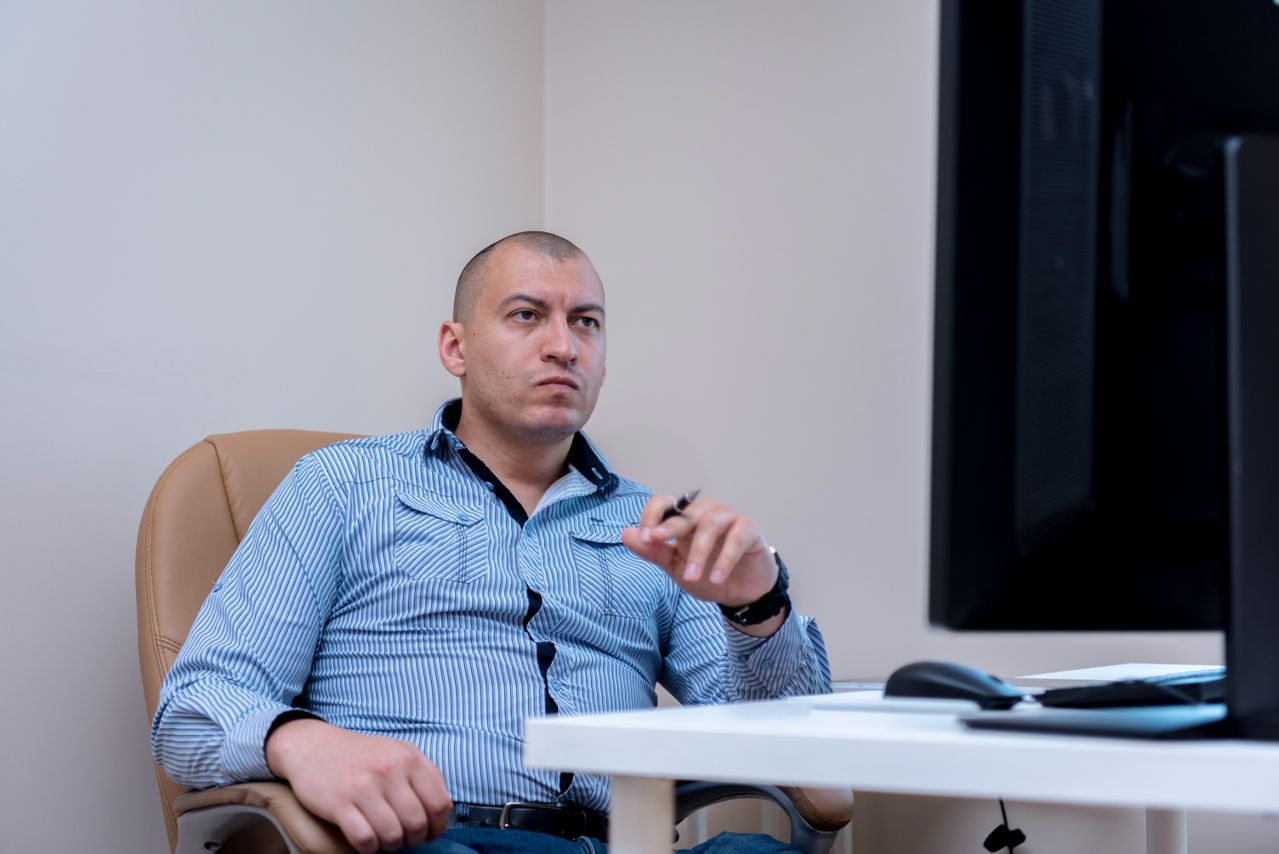
Every morning at around six, just as daylight begins to appear, I head outside for an hour of brisk walking. It is a routine I rarely miss. Then I return to my home office, where I spend much of the day sitting in front of a computer. Two cable machines stand within easy reach, offering the opportunity for a few minutes of strength training whenever I want. Yet most days, they remain untouched. I have the equipment, the space and the knowledge. What I apparently lack is the habit of using them during my working day. So I have to ask myself an uncomfortable question: Does my morning exercise compensate for all those hours at my desk, or am I confusing being physically active with not being sedentary? It is a question that millions of office workers, remote employees and fitness enthusiasts should probably be asking themselves. And the scientific answer is considerably more encouraging, and more complicated, than the familiar warning that sitting is the new smoking.
Can One Hour of Exercise Really Offset Eight Hours of Sitting?
The short answer is that substantial daily physical activity can greatly reduce the increased mortality risk associated with prolonged sitting. That is not wishful thinking. In 2016, researchers led by Ulf Ekelund analyzed data from more than one million adults in a major study published in The Lancet. Their findings suggested that approximately 60 to 75 minutes of moderate-intensity physical activity per day could offset the increased risk of premature death associated with sitting for more than eight hours. Among the most physically active participants, prolonged sitting was not associated with a statistically significant increase in all-cause mortality compared with the reference group. The results were important because they challenged a popular assumption: that hours spent sitting create irreversible damage regardless of how much someone exercises. But there is a catch. The researchers studied associations between activity, sitting and mortality, not whether an individual workout literally reverses every biological consequence of remaining seated. Anyone interested in the original evidence can read the Lancet meta-analysis of sitting time, physical activity and mortality. Its message is reassuring for active people with desk jobs, but it is not a license to ignore movement for the rest of the day.
Why the Research Changed Its Answer From 75 Minutes to 40
Four years later, another major analysis offered an even more encouraging perspective. Published in the British Journal of Sports Medicine in 2020, the study combined data from more than 44,000 middle-aged and older adults whose physical activity and sedentary time had been measured using accelerometers rather than relying entirely on questionnaires. The researchers found that approximately 30 to 40 minutes of moderate-to-vigorous physical activity per day attenuated the association between high sedentary time and mortality. Why the difference from the earlier estimate of 60 to 75 minutes? Measurement methods matter. People are notoriously imperfect at remembering how long they sit, walk or exercise. Wearable movement sensors provide a more objective picture, although they also have limitations. The two studies therefore should not be interpreted as contradictory prescriptions. They demonstrate that sufficiently high levels of physical activity can substantially reduce the mortality risks associated with sedentary lifestyles. They do not identify a magical threshold at which sitting suddenly becomes harmless. The relationship is gradual, influenced by activity intensity, total movement and individual health characteristics.
The Difference Between Exercising and Being Active
Here is where my morning routine becomes particularly interesting. An hour of brisk walking represents a meaningful amount of physical activity. Depending on pace, terrain and individual fitness, it may qualify as moderate-intensity exercise. But once I sit down at my computer, my movement pattern changes dramatically. I can be physically active by public health standards and still accumulate many hours of sedentary behavior. These are not mutually exclusive categories. Sedentary behavior refers to waking activities performed while sitting, reclining or lying down with very low energy expenditure. Physical inactivity, by contrast, means failing to achieve recommended amounts of physical activity. A person can meet the weekly exercise recommendations and still spend much of the day sitting. Conversely, someone who stands and walks frequently at work may accumulate substantial light movement without performing a structured workout. The distinction matters because exercise and sedentary time describe different dimensions of daily behavior. We should measure both rather than assuming that a morning workout tells the entire story.
What Happens Inside the Body During Long Sitting Periods?
Prolonged sitting reduces the muscular activity involved in maintaining movement and supporting energy expenditure. The large muscles of the legs, which contribute substantially to glucose uptake and metabolic regulation, remain relatively inactive compared with walking or other movement. Experimental studies have shown that interrupting sitting with brief bouts of activity can improve certain short-term metabolic responses, including post-meal glucose regulation, under specific conditions. But it would be misleading to suggest that blood circulation stops, muscles shut down completely or metabolism becomes permanently damaged whenever someone sits for several hours. Human physiology is more resilient than that. The concern is the repeated accumulation of very low movement across days, months and years, particularly when combined with insufficient exercise. Long-term observational studies associate high sedentary time with unfavorable health outcomes, although lifestyle, occupational and socioeconomic factors can complicate interpretation. A sensible response is not to fear the office chair. It is to recognize that a chair should not become the default position for virtually every waking hour.
The New 2026 Research: Small Changes May Matter More Than We Think
Research published in The Lancet in January 2026 adds another important dimension. Investigators examined data from prospective cohorts using device-measured physical activity and sedentary time, including more than 40,000 participants from Norway, Sweden and the United States, alongside a separate analysis of nearly 95,000 UK Biobank participants. They estimated the potential population-level impact of relatively small changes in daily behavior. An additional five minutes of moderate-to-vigorous physical activity per day was associated with meaningful reductions in projected deaths under the study's modeled scenarios. Reducing sedentary time by 30 minutes daily also produced potentially important population-level benefits. These estimates are not promises that any individual will live longer by a specific percentage. They are statistical projections based on observed associations and assumptions about changes in behavior. Nevertheless, the findings challenge the idea that health improvement requires a dramatic transformation. Someone who already exercises regularly may benefit from distributing additional movement throughout the day. Someone who rarely exercises may gain considerably from starting with just a few minutes. The most useful change is often the one that can be repeated.
| SCIENTIFIC STUDYDAILY ACTIVITYKEY FINDING | ||
| The Lancet (2016) | 60–75 minutes | Moderate activity associated with offsetting the increased mortality risk linked to prolonged sitting. More than 1 million adults analyzed. |
| BJSM (2020) | 30–40 minutes | Moderate-to-vigorous activity associated with attenuating the mortality risk linked to high sedentary time. More than 44,000 adults analyzed. |
| The Lancet (2026) | 5 extra minutes | A small increase in moderate-to-vigorous activity associated with potentially meaningful population-level mortality benefits. |
Sources: Ekelund et al., The Lancet (2016); British Journal of Sports Medicine (2020); The Lancet (2026). Observational findings, not guaranteed thresholds.
My Two Cable Machines Have Become Expensive Office Furniture
There is something mildly absurd about having two cable machines within reach of my desk and rarely touching them during working hours. I do not need to drive to a gym, change clothes or wait for equipment. A short resistance-training session would require very little preparation. Yet professional concentration creates its own momentum. Once I begin working, I tend to remain seated because the next task always seems more urgent than standing up. This is not a shortage of exercise knowledge. It is a problem of behavioral routines. The same pattern affects people who buy standing desks, exercise bikes or resistance bands and then gradually stop using them. Equipment availability removes practical barriers, but it does not automatically create a habit. For my own routine, a more realistic approach might be to associate a brief movement break with an existing event: finishing a substantial task, taking a telephone call or preparing another coffee. A few controlled repetitions at the cable machines would not replace a complete strength-training program, but they could turn an unused opportunity into a regular part of the working day.
Should You Stand Up Every 30 Minutes?
Many workplace wellness programs recommend standing or moving at regular intervals, often every 30 minutes. The principle is reasonable, but the scientific evidence does not establish one universally optimal break schedule for every person and every health outcome. Short laboratory experiments have tested different frequencies and durations of movement breaks, with some showing improvements in post-meal glucose responses or other metabolic markers. However, these immediate physiological effects should not be confused with proof that a particular break interval prevents cardiovascular disease or extends life. Standing is also not the same as walking. Simply replacing a chair with a standing desk may increase energy expenditure only modestly, while brief walking breaks activate more muscle and produce greater movement. For someone deeply engaged in computer work, a rigid alarm every half hour may become irritating enough to be ignored. A practical alternative is to build movement around natural transitions in the working day. The goal is to reduce uninterrupted sedentary time without turning health into another source of constant interruption and frustration.
Walking and Strength Training Solve Different Problems
My morning walking routine offers cardiovascular and metabolic benefits, but it does not provide every stimulus needed to maintain muscular strength. This is particularly important with advancing age. Walking engages the lower body and supports endurance, yet it generally provides less progressive resistance for many major muscle groups than dedicated strength exercises. Resistance training helps preserve strength, physical function and the ability to manage everyday tasks. The World Health Organization recommends that adults perform muscle-strengthening activities involving major muscle groups on at least two days per week, alongside regular aerobic activity. This is not an argument for turning every office break into a demanding workout. A few minutes of cable exercises can complement a structured program, but progressive resistance, sufficient recovery and consistency remain important for strength development. In our earlier Fitness.com article, Exercise as a Longevity Drug: Is It Still Better Than Anything in a Bottle?, we examined the broad health value of physical activity. The sitting question adds a practical dimension: even a well-established exercise routine can leave opportunities for additional movement during the rest of the day.
Does Working From Home Make the Problem Worse?
Working from home eliminates commuting time for many employees, but it can also remove small movements that previously occurred almost automatically. Walking to a meeting room, crossing an office building, visiting a colleague or leaving the workplace for lunch may disappear from the daily schedule. Remote work can therefore create both opportunities and obstacles for physical activity. Someone with a flexible schedule may find it easier to exercise in the morning, take walking breaks or use home fitness equipment. Another person may spend even longer at a computer because work and private life occupy the same physical space. The outcome depends on individual circumstances rather than the location of the desk alone. For people who already train regularly, the most useful adjustment may not be another hour at the gym. It may be reclaiming the small movements that disappeared when professional life became increasingly digital. A home office can be designed to encourage activity, but the design only works when movement becomes part of the routine.
What If You Already Exercise an Hour Every Morning?
For someone who genuinely completes an hour of brisk walking every morning, the evidence offers considerable reassurance. Large observational studies suggest that substantial moderate-to-vigorous activity can offset much of the increased mortality risk associated with prolonged sitting. But intensity matters. A leisurely stroll and sustained brisk walking do not necessarily produce the same physiological stimulus, and a person's cardiovascular fitness influences how demanding a particular walking pace feels. The studies also examine average population relationships rather than predicting an individual's health outcomes. There is no reason to conclude that an active person must double their exercise time simply because they work at a desk. Instead, the next improvement may come from maintaining the morning routine, adding regular resistance training and interrupting some of the longest sitting periods. This approach addresses cardiovascular fitness, muscular strength and sedentary behavior without treating them as interchangeable. It also respects a practical reality: most adults have jobs, responsibilities and limited time. Health recommendations are more useful when they fit into actual lives.
The Real Question Is What Happens During the Other 23 Hours
There is a danger in turning exercise research into a daily accounting exercise. Sixty minutes of walking does not purchase unlimited sitting, just as ten minutes of strength training cannot erase every consequence of poor sleep or an unhealthy diet. Human health does not operate through a simple exchange of minutes. But the opposite claim, that prolonged sitting makes exercise almost pointless, is equally misleading. The strongest evidence supports the value of substantial physical activity, while newer research suggests that reducing sedentary time and adding small amounts of movement can also matter. The practical lesson is therefore not to choose between a morning workout and an active working day. It is to combine them when possible. I have no intention of abandoning my early walk. It is one of the most reliable parts of my daily routine. But the two cable machines standing in my home office are a reminder that my opportunities for movement do not end when I return from outside. Perhaps the next improvement in my fitness will not require another ambitious training plan. Perhaps it will begin with getting out of my chair a little more often.
Scientific Sources
Ekelund, U., et al. (2016). Does physical activity attenuate, or even eliminate, the detrimental association of sitting time with mortality? A harmonised meta-analysis of data from more than 1 million men and women. The Lancet, 388, 1302–1310. DOI: 10.1016/S0140-6736(16)30370-1. Ekelund, U., et al. (2020). Joint associations of accelerometer-measured physical activity and sedentary time with all-cause mortality: a harmonised meta-analysis in more than 44,000 middle-aged and older individuals. British Journal of Sports Medicine, 54, 1499–1506. DOI: 10.1136/bjsports-2020-103270. Ekelund, U., et al. (2026). Deaths potentially averted by small changes in physical activity and sedentary time: an individual participant data meta-analysis of prospective cohort studies. The Lancet, 407, 339–349. DOI: 10.1016/S0140-6736(25)02219-6. World Health Organization (2020). WHO Guidelines on Physical Activity and Sedentary Behaviour. Bull, F. C., et al. (2020). World Health Organization 2020 guidelines on physical activity and sedentary behaviour. British Journal of Sports Medicine, 54, 1451–1462.
0 Comments
Log in to join the discussion.