
Unsure what to do. Help, please!

Hi there,

I'm 23 years old, male, 5'7" and weigh close to around 70kg. I will attach a photo of how I look at the bottom in hopes you could provide some advice for me :)

My waist measurement is about 88-90cm (so I'm not huge or overweight, but clearly have some fat to burn) and my goal at the moment is to burn my body fat so I can have a flat stomach and become more lean. I also want to tone up by putting on some muscle.
I joined a gym in October and got a personal trainer which I could only afford once a week (he is expensive!) but I don't see him anymore because of the cost so I'm doing everything myself now from what I've learnt from him. I wasn't particularly motivated for a long time to keep up the gym work, but something in me sparked and now I am going at least 4 days a week.

Anyways, he told me that I should only workout doing weights and avoid cardio altogether (even though I enjoy cardio) and that I should eat, eat, eat! He told me to eat more calories and plenty of carbs. But since I want to burn body fat I always thought I needed to avoid carbs and consume less calories than I expend through exercise ???? So I feel like he's getting me to do the opposite and getting further from my goals of burning the fat. So I feel like over the past few weeks I have gotten nowhere because I don't know what I should really be eating :(

I've attached a couple of photos so you can see what my body is like and maybe you have an idea what I should do. Please help me. Thank you!

View attachment 6137View attachment 6138
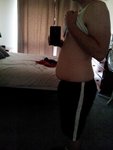
 

Attachments

  • 20140324_110040.jpg
    20140324_110040.jpg
    32.6 KB · Views: 155
  • 20140324_110133.jpg
    20140324_110133.jpg
    20.3 KB · Views: 163
Training wise try this thread from Goldfish. He is one of the best generic trainers you will see.
http://training.fitness.com/weight-...inefficient-split-maybe-read-first-34522.html

Interesting PT you had there. I would never advise anyone to not do cardio, failing to look after your heart and lungs is stupid for a number of reasons and there are so many types of cardio work there will be some you enjoy. There are a few bits of advise and guidance in http://training.fitness.com/articles-research/mythbusting-fitness-files-55308.html that are definitely worth checking out, because many myths in the fitness world there are (I make a lousy Yoda).

Losing body fat is achieved by cutting down not out. We are designed for a high complex carb diet, and the key word there is complex, so starch not sugars. You also need to be realistic with yourself and aim for absolute maximum of 2 pounds of fat a week loss. 1 is impressive, 2 is incredible, more is going to be mostly water unless you are burning muscle for energy. Consider 1 pound of fat is 3,500 calories, so losing 1 in a week means burning 500 calories more a day than you have consumed.
 
Sounds like this guy was trying to get you on a heavy bulk. Here's my .2. If you like it, do it. If you want to do cardio, do cardio. I used to love running, until I got into lifting. Now, I couldn't tell you the last time I went out for a jog. Admittedly, it's something I really need to do for general health. I do, however recommend that if you are going to do cardio, get on some sort of weight routine. Cardio and no weights will just give you that "skinny fat" look. Even if it's something as simple as a compound A/B routine twice a week.
 
Thanks for providing those links. There's so much info there that it's overwhelming to me haha.

I'm often completely clueless when it comes to nutrition and exercise and what is right for my body. Since my main goal at this point in time is to just burn fat, do you think I should eat healthier smaller portioned meals and do a bit more cardio (but also some weight days), and then once I have reached the size I like I can start building muscle and eating more protein + carbs? Or is that the wrong way to go? I just read lots of articles and hear all different things I should be doing to reach my goal and I just get totally confused as to what I should do.

Sorry, you can see how little I know haha.
 
Better to accept what you don't know and learn in advance than learn by trial and error, some of the errors can be dangerous.
Use the KISS system as much as you can, that is Keep It Simple Stupid, it works far more often than micro analysing.

Keeping diet simple. Use tools like food pyramids to gauge balance, ignore serving numbers, just look at proportion. Staple foods, potato, pasta, rice, bread etc. being the largest part, vegetables being next, meat, fish whole dairy etc. next with treats, sauces, oils etc. being a tiny amount.
The proportion will not change much if at all as you get more into higher intensity training. Your need for protein will increase due to the higher levels of damage and growth, but the amount of energy you will require for your training will increase by the same proportionate amount.
Sticking with food keeps it simpler, as soon as you supplement it becomes complex.

Training simplicity. First priority, find stuff you enjoy, if you hate what you do, it is very unlikely you will stick to it. Obviously give things time to grow on you but be realistic.
Balance. Do some cardio, endurance, strength, mobility, & flexibility especially as a beginner. As you progress you will likely find yourself doing more of one or a few than the others, but totally neglecting any will cause issues. Having massive strength and no mobility of flexibility is like having a reliant robin car with a Ferrari engine, lots of power and no control. Not doing cardio will mean allowing the heart and lungs on which your very life depends becoming weak, if you hate static state stuff like jogging etc. do circuit training or other stuff instead.

Weight loss is a simple formulae with complexities. Eat a little less food than you need for your daily activities and you will lose weight. Not to much so your body thinks it is starving. Monitor loss on long term trends, because water gain or loss can make dramatic shifts that mean absolutely nothing. However if you have been working for a month, your waist is bigger and you weigh more that tells you there is something wrong. If during the month your weight has gone up but you are starting to see definition in your muscles, fat is disappearing and you are building far heavier muscle.
Keeping this one simple is not easy. Judge it more on the mirror than the scales or do as Goldfish often recommends and take photos of yourself.
 
Cardio and no weights will just give you that "skinny fat" look.

What's the skinny fat look? I do a bit of weight training - using the resistance machines but I simply cannot use weights greater than 25 kg. I have to admit - I've had surgery which damaged the nerves from my underarm area to a couple inches above my elbow - so I tend to take it easy when lifting or pushing on the resistance machines. Do you by chance have any suggestions to keep my arms toned?
 
The skinny fat look is where there is very little body tissue but what is there is fat and flabby. Many anorexics have this.
By doing resistance training you will be keeping the muscles taut and avoiding this.

Arm tone is best achieved by doing compound work. Strange concept for many but bench press works the triceps as prime mover, pull ups or lat pull downs have prime mover of biceps so doing these and other compound movements tone the arms nicely.
With the damage you will find this harder because tone is generally a matter of building a little bit of muscle using muscular strength endurance work.

I have deliberately avoided giving precise program guidance here. I can give ideas as others can but I would want to know what the range of movement and limitations are on your arms before doing so. I don't mind risking myself with stupidity but not others.
 
Apologies if I've gone off topic for this thread...

With my upper arm - I have no feeling on the underside. Not to get too graphic - if I get my underarm waxing done, I feel nothing. The surgery was done to remove breast lumps and they were very close to some nerves which were damaged. I was told these were the risks but I needed to have the bad bits removed. In the gym I do a bit of both pull ups and lat pull downs - however there is a resistance machine which I call the butterfly machine (bringing your right angled arms to the front of your chest) - I find that one most difficult as the tension in my upperarm makes the areas near the scar a bit sore. I hope that has explained it a bit. I want to make sure I am doing to right/efficient resistance exercises for my arms.
 
Very off topic but I used to consider waxing a sign that men must be smarter than women, especially bikini line. In the name of equality, men do it too now.

Just clarifying that there is no real muscle damage from the surgery, but you have scarring on the skin and lack of sensitivity meaning if you were doing damage you may not realise it.
If this is right it should be fairly easy to set you up a program. There would be a certain amount of indirect assessment, where you watch to ensure both sides are doing the same and judge what is happening on the damaged side by how the other side feels. Not ideal but we work with what we can do. Obviously this system means stop early rather than take chances, if you would normally stop at discomfort level 5 out of 10 knowing that is your max, you would be stopping at 3 or max 4 to be totally safe.
If I am wrong please correct me.
 
No - no muscle damage, just nerve damage. You are right - I could be doing damage and not realise it. However if I am careful I can ensure that it will be fine. Just to note - the damage was done to both arms - there is scarring on both sides. Not pretty but hey ho - these things happen!

I really appreciate any advice you can offer.
 
You are using predominantly machines so the exercises I would recommend would be seated rowing, lat pull downs, and pull ups for the biceps, bench (chest) press, shoulder press and bench dips for triceps.
Being distracted by work I forgot to ask how often you train and what kit you have available. any guidance is good.

Difficulties you will have are serious because the damage is to both sides. Using machines is good in many ways regarding safety, but you could be working out of balance or unevenly without knowing it and the machine would compensate. Good news is you don't drop weights on yourself using a machine, that's useful.

Because your body won't tell you if you are causing damage you will have to be uber vigilant on technique and try to ensure the feedback you get is even both sides. I cannot guarantee there will not be damage to the skin etc. this only stretches 5% as it is scar tissue even less so. I had a bunch of scars removed years ago, club insurance covered it so I thought what the heck.
If there is any discomfort from the skin stop immediately, It will not stretch if you keep re-damaging scar tissue, trust me on that one. There is a strong chance that this will mean doing some of the exercises with limited movement, what those who don't know will likely call cheating, that is something that will change over time, better to do a useful half movement than damaging whole one.

Future warning. You will be building strength in limited movement. When this changes and you can do it all you will be weak in the area you haven't done and this will be annoying. Unfortunately it is a case of deal with it and work through the annoyance, something you will be used to.
 
Better to accept what you don't know and learn in advance than learn by trial and error, some of the errors can be dangerous.
Use the KISS system as much as you can, that is Keep It Simple Stupid, it works far more often than micro analysing.

Keeping diet simple. Use tools like food pyramids to gauge balance, ignore serving numbers, just look at proportion. Staple foods, potato, pasta, rice, bread etc. being the largest part, vegetables being next, meat, fish whole dairy etc. next with treats, sauces, oils etc. being a tiny amount.
The proportion will not change much if at all as you get more into higher intensity training. Your need for protein will increase due to the higher levels of damage and growth, but the amount of energy you will require for your training will increase by the same proportionate amount.
Sticking with food keeps it simpler, as soon as you supplement it becomes complex.

Training simplicity. First priority, find stuff you enjoy, if you hate what you do, it is very unlikely you will stick to it. Obviously give things time to grow on you but be realistic.
Balance. Do some cardio, endurance, strength, mobility, & flexibility especially as a beginner. As you progress you will likely find yourself doing more of one or a few than the others, but totally neglecting any will cause issues. Having massive strength and no mobility of flexibility is like having a reliant robin car with a Ferrari engine, lots of power and no control. Not doing cardio will mean allowing the heart and lungs on which your very life depends becoming weak, if you hate static state stuff like jogging etc. do circuit training or other stuff instead.

Weight loss is a simple formulae with complexities. Eat a little less food than you need for your daily activities and you will lose weight. Not to much so your body thinks it is starving. Monitor loss on long term trends, because water gain or loss can make dramatic shifts that mean absolutely nothing. However if you have been working for a month, your waist is bigger and you weigh more that tells you there is something wrong. If during the month your weight has gone up but you are starting to see definition in your muscles, fat is disappearing and you are building far heavier muscle.
Keeping this one simple is not easy. Judge it more on the mirror than the scales or do as Goldfish often recommends and take photos of yourself.

This is all awesome advice :) Thanks very much for clarifying that all to me. I can now understand it better
 
Back
Top