That is why dieting is a "touch and feel" process.
As Tom said, sometimes all you can do is wait it out. Other times, this isn't the case. If your metabolism down-regulated to a point that is ineffective for long term success due to some screwy dieting techniques from the past, or even from prolonged dieting.... sometimes you need to change some of your parameters. Like, taking a break.
It's that "touch and feel" stuff that is so frustrating to a lot of people. It would sure be a lot easier if there were a clear cause and effect chain of events that occurs with metabolism. Instead, it is a very cloudy picture, and the typical overweight person reaches one of these plateaus and gives up.
Taking a break -- I took one at the beginning of March, and it helped a lot. Planned breaks are now a part of my routine. I'm going to complete this 18 day regimen, and then one more, and then take a week off.
I reckon even apparently physical feelings of hunger have a mental component and a bunch of small physical changes from day to day (sleep, types of food, emotional states, trying to eat in awkward restaurants etc), can all impact. It strikes me that hungry patches are temporary things like plateaus - I hope they're about to move off again and leave you in peace. I feel sure they will go - because I know you will persist, the scale gods will be forced to acknowledge your efforts, and you will outlast this hard patch.
I'm just wishing their movement to be speedy. Cos they are a pain in the ... you know! Bugger off hungry bear days!
Thanks, Felici. It's strange about the hunger pangs. Sometimes I don't have them at all, even when I only consume around 2,000 calories, low for me. Then other days, I get them, even when I'm closer to 3,000 calories. And there's no difference in the food I'm eating.
For me, I get complacent, and begin letting old habits creep back in or indulging too many times...and not weighing, making excuses to not workout...telling myself its fine and then the next thing I know my weight has crept back up...and then it is out of control.
Mentally then, I am defeated and there is another whole dynamic to deal with to get out of that mindset.
Yes, that's been my problem in the past, too. That's why I'm taking a full two years to reach my goal this time. I want the habits to really get a chance to take hold. They say that you only need to do something for 4 weeks for it to become a habit. I don't really buy that. I think it will take me a couple of years to solidify my new habits, and even then there will be a huge temptation to get lazy.
Tom, I haven't read the article referenced in your earlier post, but, having failed to successfully maintain weight loss in the past, from day one this time around I've read a TON of material regarding successful maintaining and have purposely chosen to maintain for extended periods throughout-as I am presently. So, my 2 cents on a couple of things.
<snip> . . .
All of this is stuff you probably already know...I think I'm just on a mini-soap box about it because I think there is a great danger in underestimating how much work it requires, at least in the first five years, to maintain that initial loss. Thanks for the platform
Cym, I tried to give you reps for this, because it is such a good post. I think you're absolutely spot on here. The "natural" thing to do once you reach your goal is to say, "Wow, that was sure a struggle, but now I can relax." You're right -- you can't relax then; you have to be as vigilant as ever.
I've read that too, about the body's natural inclination to return to a certain weight. Keeping the fiber high is a good remedy for that; I think I need to concentrate on that a bit more.
On point number 3, that's why I intend to keep exercising for good. That's the ONLY way you can make up for the inevitable cheats, IMO. And in my case, surpluses manifest themselves almost instantaneously, while deficits take their sweet time to show up.
Thanks for your comments, much appreciated, as always.



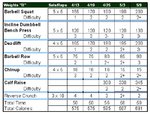
 OK, I just gotta use one of these new smileys. Why? Today, for the first time in 8 years, I squatted and deadlifted 200 lbs. Now, I know this is a warmup weight for someone like Steve, but that's an increase of 50 lbs. in the squat over the past 2 months, and 70 lbs. in the deadlift over 2 months.