

tonyruther
New member
We All Know Water Is Essential—But Few of Us Think About Where It Comes From
When people talk about living a healthy lifestyle, the conversation usually focuses on nutrition, exercise, sleep, and mental well-being. Hydration is almost always part of that discussion because our bodies depend on water for nearly every biological process.
Water helps regulate body temperature, supports digestion, transports nutrients, lubricates joints, and plays an essential role in maintaining energy levels. Yet one important question often gets overlooked:
How secure is your access to clean drinking water?
For many families, water simply comes from the tap. It's available whenever needed, so it's easy to assume it always will be. However, changing weather patterns, aging infrastructure, natural disasters, and rising demand have prompted more people to think differently about water security.
Hydration Starts with Clean Water
Most health professionals recommend drinking enough water each day to support normal body functions. While individual needs vary, staying hydrated can help with:
- Supporting physical performance
- Maintaining focus and concentration
- Regulating body temperature
- Supporting digestion
- Replacing fluids lost through daily activities
Why Water Security Matters More Than Ever
Across many regions, communities have experienced droughts, floods, severe storms, and temporary disruptions to local water systems.
These events don't mean clean water suddenly disappears everywhere, but they do remind us that even reliable infrastructure can be affected by extreme conditions.
For this reason, many homeowners are exploring ways to become more prepared.
Some choose to install home water filtration systems.
Others collect rainwater for non-drinking uses where permitted.
Some invest in emergency water storage.
Others simply begin learning about alternative water technologies.
Preparedness isn't about expecting the worst. It's about understanding your options.
The Growing Interest in Water Independence
Just as many homeowners keep a flashlight, first-aid kit, or backup generator, water preparedness is becoming another part of emergency planning.
The goal isn't to replace public water systems but to reduce dependence on a single source if an unexpected interruption occurs.
This growing interest has led many people to learn about:
- Home water filtration
- Rainwater harvesting
- Water storage solutions
- Atmospheric water generation
Can You Really Collect Water from the Air?
Many people are surprised to learn that the air around us naturally contains water vapor.
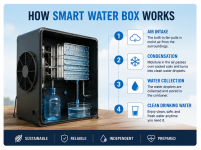
Atmospheric Water Generators (AWGs) use condensation technology to capture moisture from humid air and convert it into liquid water before filtration.
Commercial versions of this technology have been used in various industries for years. Recently, more DIY enthusiasts have become interested in understanding how these systems work and whether they can build one themselves.
Learning Can Be Just as Valuable as Buying
One trend that's becoming increasingly popular is learning how alternative water systems function rather than simply purchasing expensive equipment.
For people who enjoy DIY projects, there are educational resources that explain atmospheric water generation in a beginner-friendly way.
One example is Smart Water Box, a downloadable guide that walks readers through the process of building a DIY atmospheric water generator using commonly available materials.
It's designed as an educational blueprint rather than a ready-made appliance, making it suitable for people who enjoy learning practical skills.
===>> Download the Smart water box blueprint now
A Healthy Lifestyle Includes Being Prepared
Health isn't only about what happens in the gym or the kitchen.
It's also about making thoughtful decisions that support long-term well-being.
Having a plan for clean drinking water, understanding alternative water technologies, and learning practical skills can all contribute to greater confidence during unexpected situations.
Preparedness doesn't have to be complicated.
Often, it starts with education.
Final Thoughts
Most people won't think about water security until they're forced to.
By then, options may be limited.
Taking time today to learn about hydration, clean water, emergency preparedness, and alternative water solutions can help you make more informed decisions for yourself and your family.
If you're curious about how atmospheric water generation works, educational resources like Smart Water Box provide an introduction to one DIY approach and can help you better understand the technology.