

nakulchauhan
New member
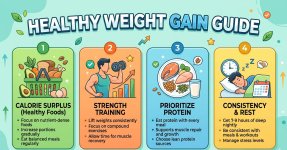
If you've ever felt frustrated staring at the scale that refuses to budge no matter how much you eat, you're not alone. Many people struggle with being underweight or skinny despite trying everything from endless snacks to giant meals. But here's the good news: healthy weight gain isn't about stuffing yourself with junk food or skipping workouts. It's a smart, sustainable process focused on building real muscle, improving your energy levels, and enhancing your overall health. In this comprehensive healthy weight gain guide, we'll walk through everything you need to know—from calculating your calorie needs to crafting the perfect bulking diet and strength training plan. Whether you're a hardgainer, recovering from an illness, or just looking to add some healthy curves and strength, this guide will help you gain weight the right way.
I've seen countless folks transform their bodies by ditching the "eat more pizza" approach and embracing nutrient-dense foods, smart training, and consistent habits. The goal isn't just to see the number on the scale rise—it's to feel stronger, more confident, and full of vitality. Let's dive in and make your weight gain journey one that sticks for the long haul.
Why Healthy Weight Gain Matters More Than You Think
Gaining weight healthily goes way beyond aesthetics. If you're naturally thin or have a fast metabolism, being underweight can lead to low energy, weakened immunity, hormonal imbalances, and even bone density issues over time. On the flip side, adding pounds the right way—primarily through muscle—can skyrocket your metabolism, improve posture, and make everyday tasks feel easier. Think about it: more muscle means better insulin sensitivity, stronger bones, and a body that's more resilient to stress.But what does "healthy" even mean here? It's all about body composition. Unhealthy weight gain often comes from excess fat due to a dirty bulk (think endless fast food and soda). Healthy weight gain prioritizes lean muscle mass with a moderate calorie surplus, balanced nutrition, and resistance training. Aim for 0.5 to 1 pound per week—that's sustainable and minimizes fat storage.
For athletes, models, or anyone in a calorie-deficit phase (like after a cut), this guide is your roadmap back to strength. Even if you're just tired of feeling "skinny-fat" or want to fill out your clothes better, healthy weight gain can boost your confidence and quality of life. Remember, this isn't a quick fix. It's a lifestyle shift. Consult your doctor before starting, especially if you have underlying conditions like thyroid issues or digestive problems.
Step 1: Assess Your Starting Point and Calculate Your Calorie Needs
Before you add a single extra bite, you need to know your baseline. That's where tracking your Basal Metabolic Rate (BMR) and Total Daily Energy Expenditure (TDEE) comes in. These numbers tell you exactly how many calories your body burns daily, so you can create a precise surplus for weight gain.The most accurate formula for BMR is the Mifflin-St Jeor equation. For men: BMR = (10 × weight in kg) + (6.25 × height in cm) – (5 × age in years) + 5. For women: BMR = (10 × weight in kg) + (6.25 × height in cm) – (5 × age in years) – 161.
Let's say you're a 25-year-old man who weighs 60 kg (about 132 lbs) and stands 175 cm (5'9") tall. Plugging in: BMR = (10 × 60) + (6.25 × 175) – (5 × 25) + 5 = 600 + 1,093.75 – 125 + 5 = 1,573.75 calories.
Now multiply by your activity level to get TDEE:
- Sedentary (desk job, little exercise): × 1.2
- Lightly active (light exercise 1-3 days/week): × 1.375
- Moderately active (moderate exercise 3-5 days/week): × 1.55
- Very active (hard exercise 6-7 days/week): × 1.725
- Extra active (very hard exercise + physical job): × 1.9
Don't forget body measurements and photos. Scale weight alone can mislead—muscle is denser than fat, so you might look leaner even as the pounds add up. Weigh yourself first thing in the morning after using the bathroom, same conditions every time.
The Nutrition Blueprint: Fueling Healthy Weight Gain
Nutrition is 70-80% of the battle in any weight gain guide. You need a calorie surplus, but it has to come from whole foods that support muscle repair and energy. Focus on a balanced macro split: 40-50% carbs for energy, 25-30% protein for muscle building, and 25-30% fats for hormones and satiety.Protein is king—aim for 1.6 to 2.2 grams per kilogram of body weight. For our 60 kg example, that's 96-132 grams daily. Spread it across meals for optimal absorption.
Carbs fuel your workouts and replenish glycogen. Go for complex sources like oats, rice, potatoes, and whole grains. Healthy fats from avocados, nuts, olive oil, and fatty fish keep you full and support testosterone production.
Here are the best foods for healthy weight gain—stock your kitchen with these:
- Proteins: Eggs, chicken, turkey, lean beef, salmon, Greek yogurt, cottage cheese, lentils, tofu, and whey protein powder.
- Carbs: Brown rice, quinoa, sweet potatoes, bananas, oats, whole-grain bread, and pasta.
- Fats: Avocados, almonds, peanut butter, olive oil, full-fat dairy, chia seeds, and dark chocolate.
- Calorie boosters: Add cheese, nuts, or olive oil to meals without much volume.
Hydration matters too—dehydration can tank your appetite and performance. Aim for at least 3-4 liters of water daily, more if you're training hard.
Meal Planning and Timing for Consistent Gains
Forget three big meals that leave you stuffed and bloated. Eat every 3-5 hours: three main meals plus 2-3 snacks. This keeps your energy steady and makes hitting that surplus feel natural, not forced.A sample day at ~2,800 calories (adjust based on your TDEE):
Breakfast (600 cals): Oatmeal with whole milk, banana, peanut butter, and a scoop of protein powder. Top with chia seeds. (High in fiber and sustained energy.)
Mid-morning snack (400 cals): Greek yogurt parfait with granola, honey, and mixed berries.
Lunch (700 cals): Grilled chicken breast with quinoa, avocado slices, olive oil dressing, and steamed broccoli. Add feta for extra creaminess.
Afternoon snack (400 cals): Whole-grain bagel with cream cheese, smoked salmon, and a handful of almonds.
Dinner (500 cals): Baked salmon with sweet potato mash (made with milk and butter), asparagus, and a side salad with olive oil.
Evening snack (200 cals): Cottage cheese with pineapple chunks or a protein shake with whole milk.
Pro tip: Prep in batches on Sundays. Cook big pots of rice, grill chicken for the week, and portion nuts into bags. For vegetarians or vegans, swap in tofu, tempeh, beans, and nut butters—pair with rice for complete proteins.
Want recipes? Try a high-calorie smoothie: Blend banana, spinach, peanut butter, oats, whole milk, and protein powder. Or a hearty pasta: Whole-wheat noodles with ground turkey, marinara, cheese, and olive oil. These keep things delicious while supporting your weight gain goals.
Over a week, this approach adds up to consistent surplus without feeling overwhelming. Track macros for the first two weeks to build intuition, then relax into it.
Strength Training: The Secret to Turning Calories into Muscle
You can't just eat your way to healthy weight gain—training tells your body where to put those extra calories. Resistance training builds muscle, which not only looks great but raises your metabolism long-term. Skip endless cardio; focus on compound lifts with progressive overload (gradually increasing weight or reps).For beginners, a 3-4 day full-body or push-pull-legs split works wonders. Here's a simple 4-week beginner bulking program (train 3-4 days/week, 45-60 minutes per session). Rest 60-90 seconds between sets. Warm up with light cardio and dynamic stretches.
Day 1: Push (Chest, Shoulders, Triceps)
- Bench Press: 4 sets of 8-10 reps
- Overhead Shoulder Press: 3 sets of 10 reps
- Tricep Dips or Pushdowns: 3 sets of 12 reps
- Dumbbell Flyes: 3 sets of 12 reps
- Bent-Over Rows: 4 sets of 8-10 reps
- Pull-Ups (assisted if needed) or Lat Pulldowns: 3 sets to near failure
- Face Pulls: 3 sets of 12 reps
- Bicep Curls: 3 sets of 10-12 reps
- Squats: 4 sets of 8-10 reps
- Romanian Deadlifts: 3 sets of 10 reps
- Lunges: 3 sets of 10 per leg
- Calf Raises: 3 sets of 15 reps
Progress every week: Add 5-10 lbs or 1-2 reps when you hit the top of the rep range easily. Form first—watch tutorials if you're new. After 4 weeks, reassess and increase volume.
Pair this with your surplus, and you'll see noticeable strength gains in 4-6 weeks. Sleep is your recovery secret—more on that next.
 Click Here To Buy ORIGINAL Nagano Lean Body Tonic from OFFICIAL WEBSITE - SAVE 75% TODAY + FREE US SHIPPING!