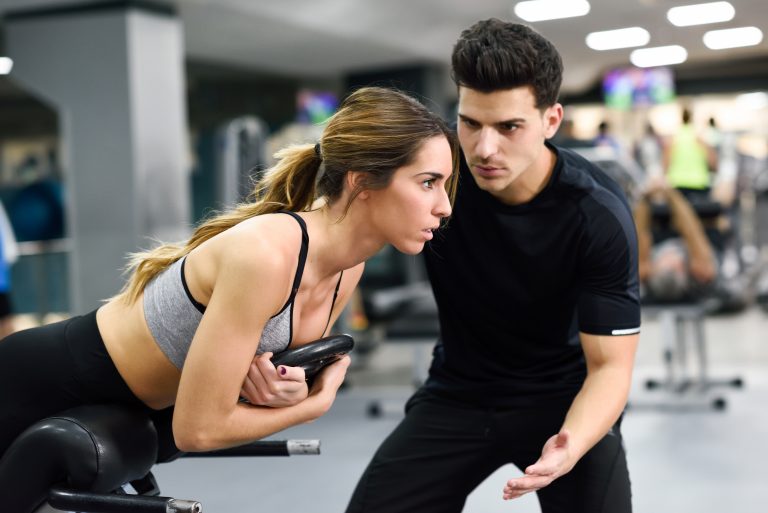
Watching Arnold Schwarzenegger coach his nephew on a butterfly machine, giving small corrections with the calm authority of someone who has spent a lifetime understanding muscles, made something suddenly obvious: fitness training is strangely intimate and strangely lonely at the same time. Two people can share a machine, a lesson, a laugh, a correction, maybe even a small family ritual. But most of the gym around them still moves in silence.
Headphones on. Phone checked between sets. Eyes forward. Everyone together, everyone alone. That is the strange genius of modern fitness. It gives people proximity without obligation, routine without a team, social contact without the emotional paperwork of belonging.
And maybe that is why fitness studios became so powerful, especially in the United States. They are not sports clubs in the European sense. They are not football teams, gymnastics clubs, handball halls or local associations where generations meet, volunteer, compete and argue about who forgot to bring the jerseys. American fitness culture grew differently. Schools, high schools and universities carried much of the organized sports system. Then adulthood arrived, and suddenly millions of people were left with a simple question: where do you go when the team is gone but the body still needs to move?
The Gym Is Full, But the Training Is Individual
A fitness studio is one of the few places where hundreds of people can train together without actually training together. In a basketball game, your movement only makes sense in relation to other players. In football, the entire experience is collective. In a rowing crew, timing is everything. In a gym, however, the bench press does not care whether anyone else is present. The treadmill does not need a teammate. The cable machine does not ask for loyalty, only repetition. This individual structure is one reason gyms work so well for adults. You can arrive when you want, leave when you want, train badly without disappointing a team and skip a week without receiving a message from a coach asking whether your commitment to the season has spiritually evaporated.
But something is missing. Fitness training can improve strength, body composition, endurance and health. What it often does not automatically provide is shared identity. A person can belong to a gym for five years and still not know the names of ten people there. At the same time, many gym members would insist that the place matters socially. They see familiar faces. They nod to the same people. They chat in the locker room. They exchange a sentence at the dumbbell rack. It is not friendship in the classic sense, but it is not nothing either. It is a form of weak social connection, and in a society where loneliness has become a public health concern, weak ties may be stronger than they look.
What Europe Calls a Sports Club, America Often Calls School
In many European countries, organized sport has traditionally been built around local clubs. A child joins a football club, a gymnastics club, an athletics club or a tennis club and may remain connected to that structure for decades. The club is not just a place to exercise. It is a social institution. It organizes competitions, youth training, adult recreational teams, volunteer work, summer festivals, arguments about budgets and occasionally the kind of sausage stand that somehow keeps the entire financial system alive. Membership fees are often modest compared with commercial gym contracts, and the club provides a sense of belonging that extends far beyond physical activity.
The United States developed another model. Much of youth sport is tied to schools. High school football, basketball, baseball, wrestling, track and field, swimming and soccer are not side activities. In many communities, they are central cultural events. The school becomes the club, the training ground, the competition structure and the social stage. Later, college sports take this logic to an extraordinary level. The NCAA system turns university athletics into a national spectacle, complete with scholarships, stadiums, television audiences and rituals that can look almost religious to European eyes. It is impressive, emotional and deeply American. But it also creates a cliff. For many people, organized sport ends when school ends.
After College, the Team Disappears
This is where the American adult fitness market finds its opening. Once high school or college sports are over, many adults no longer have a natural team structure. Some join recreational leagues, running clubs, CrossFit boxes, martial arts schools, cycling groups or YMCA programs. Cities may offer parks and recreation leagues. Churches, community centers and local associations sometimes fill part of the gap. But compared with the dense club culture found in parts of Europe, the pathway into lifelong organized sport is less automatic.
So adults drift toward gyms. The gym solves practical problems brilliantly. It is open early and late. It requires no season schedule. It does not demand technical skill. It allows beginners, former athletes, exhausted parents, traveling professionals and socially cautious people to occupy the same space without needing to coordinate anything. Nobody has to be selected. Nobody has to be good enough. Nobody has to explain why they only want twenty minutes on the elliptical and then to disappear quietly into the parking lot like a fitness raccoon.
The Rise of Fitness Without Community
The commercial gym did not merely sell equipment. It sold independence. That independence is attractive. For many adults, team sports come with friction: fixed times, performance pressure, social obligations, competition, travel, injuries and the terrifying possibility of being placed in a WhatsApp group with twenty-seven people who use it for everything except relevant information. A gym removes most of that. It gives people a clean transaction. Pay the fee, enter the room, do the work, leave. In an individualistic culture, that has enormous appeal.
But the absence of deeper community also has consequences. Without a coach, progress depends on self-education or personal training. Without teammates, motivation must come from habit, goals or guilt. Without a club culture, many people treat fitness as a private maintenance project rather than a shared experience. This helps explain why so many gym memberships exist alongside so much inactivity. The gym offers access, but access is not the same as belonging. A sports club expects participation. A gym sells possibility. There is a difference, and the difference is visible every January.
Why Some People Prefer the Gym Anyway
It would be too easy to romanticize clubs and mock gyms. The truth is more complicated. Many adults do not want the obligations that come with organized sport. They do not want a coach, a team dinner, a league table or a committee meeting about new uniforms. They want control. They want the freedom to train chest on Monday, legs never, and call it a split. They want to be around people without being absorbed by them. For introverts, busy professionals and people rebuilding confidence, that low-pressure environment can be ideal.
The gym also offers something traditional sport often does not: visible, measurable self-improvement without needing to win against anyone. Add five pounds to the bar. Walk longer. Reduce pain. Improve posture. Lose weight. Build muscle. Recover after illness. These are private victories, and they matter. A person who would never join a basketball league may still change their life through strength training. The problem is not that fitness is individual. The problem is that modern fitness sometimes forgets that humans are not machines with subscriptions.
The Social Power of Weak Ties
Still, gyms create a subtle kind of community. The person at the front desk remembers your name. The same older man uses the leg press every Tuesday. Someone asks whether you are done with the bench. A stranger spots you for one heavy set and disappears forever, like a helpful Greek god in sweatpants. These moments are small, but they create familiarity. For many people, especially adults with fragmented schedules, this may be enough. They are not looking for a second family. They are looking for a place where they are recognized without being required.
This is why the gym floor is not socially empty. It is socially light. That lightness is part of the product. It allows people to feel connected while remaining independent. In a world where many adults are overworked, overstimulated and tired of obligations, this may explain why the gym has replaced the sports club for so many. It is community with an exit button.
What America Could Learn From Club Culture
The American model has strengths. School sports create identity, ambition and unforgettable experiences. College sports can be spectacular. Commercial gyms offer access and flexibility. But the missing middle remains obvious: affordable, lifelong, community-based sport for adults who are no longer students and do not want to buy fitness only as a monthly subscription. More local clubs, community leagues, adult beginner programs and intergenerational sports structures could help bridge that gap.
Not everyone needs a team. But more people might benefit from one than they realize. Fitness can build bodies. Sport can build relationships. The best system would not force people to choose between them. It would allow the solitary lifter, the casual runner, the retired athlete, the beginner and the socially curious adult to find a place. Because the real question is not whether fitness studios are good or bad.
trength matters. Muscle matters. Health matters. But as discussed in The New Superhuman Culture: When Fitness Stops Being Human, modern fitness sometimes risks turning optimization into a goal rather than a tool. The deeper question may not be how much stronger we can become, but what all that strength is ultimately for. In a culture obsessed with personal records, biohacking, and self-improvement, many people may be looking for something less measurable: meaning, connection, and a sense of belonging. Perhaps the real challenge is not building a stronger body, but making sure we are not training alone when what we really needed was someone beside us saying, “try it this way.”*