 Français
 Deutsch
 Español
 Fitness

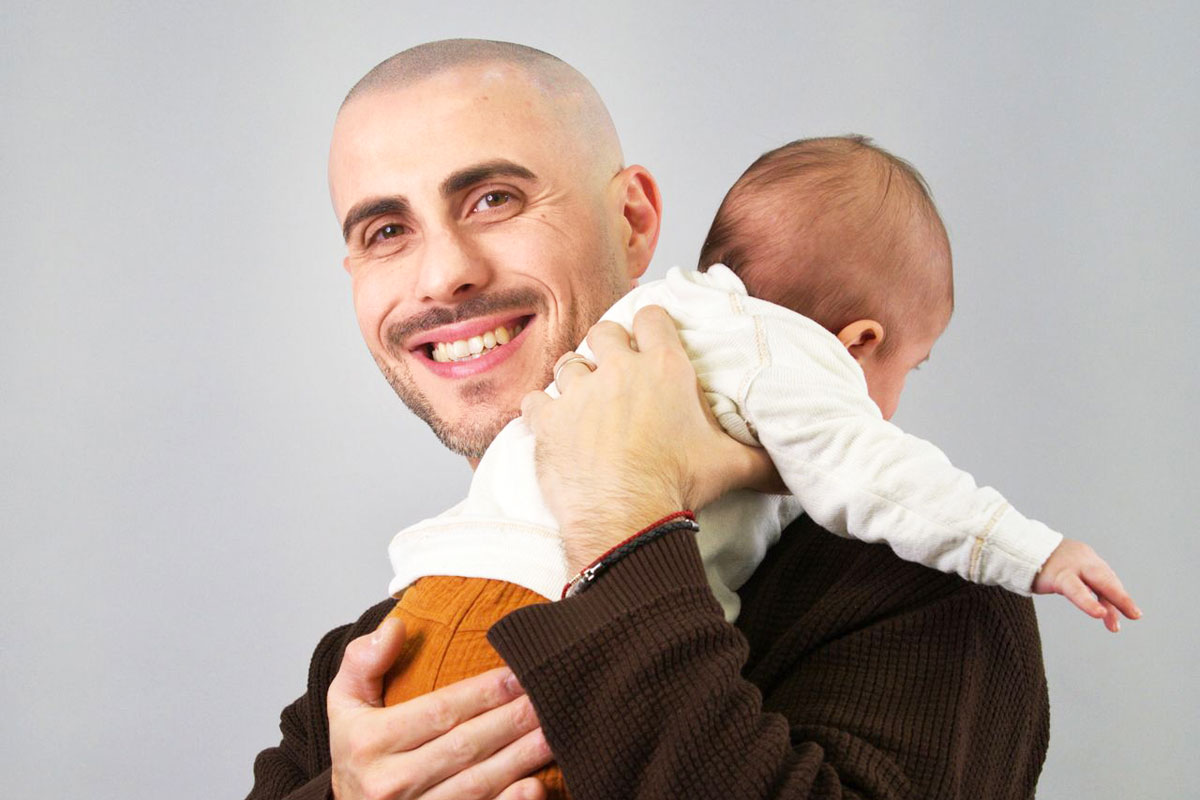
America has always admired people who work hard. Build a career, raise a family, buy a home, stay healthy and somehow find enough time to enjoy the rewards of success. It sounds like the American Dream, at least until someone tries to fit everything into a single day. For millions of working Americans, professional ambition is no longer limited to earning a living. A successful career has become an important part of personal identity. Add family responsibilities, financial pressures and the modern expectation of maintaining an attractive, athletic body, and an uncomfortable question emerges: when exactly is the body supposed to recover?
The gym, once a place to escape everyday stress, can become another appointment in an already overcrowded calendar. And missing that appointment may feel like another personal failure. Perhaps the problem is not that Americans lack discipline. Perhaps they have become so disciplined that they no longer know when to stop.
The American Dream Has a Recovery Problem
Career success occupies a special place in American culture. Professional advancement often represents more than financial security. It can influence social status, self-esteem and the way people measure their achievements. Yet career ambitions rarely exist in isolation. Parents want to spend meaningful time with their children. Couples want to maintain their relationships. Household expenses must be paid, and professional qualifications need constant updating. Meanwhile, social media offers a seemingly endless parade of successful entrepreneurs, attentive parents and exceptionally fit professionals who appear to manage everything effortlessly. The resulting pressure is not necessarily imposed by an employer or a personal trainer. Much of it becomes internalized. A missed workout feels like wasted potential. An evening without professional productivity feels like falling behind. Even relaxation becomes something that must be earned. The contradiction is obvious: a lifestyle supposedly designed around achievement and well-being can gradually undermine the physical resources required to sustain either.
After the Midterms: Political Change, Economic Pressure
The November 2026 midterm elections have provided Americans with another opportunity to reconsider the country's political direction. For some voters, the results may offer renewed optimism; others will interpret the political landscape differently. But political expectations and everyday economic realities do not necessarily move together. The American labor market has experienced periods of disappointing employment growth during the past two years, contributing to concerns about job security and future opportunities. Even when monthly employment figures improve, workers may remain worried about household costs, career prospects and the consequences of losing a stable income. Those pressures matter for physical health because financial insecurity and professional uncertainty do not disappear when someone enters a fitness center. An employee concerned about restructuring, promotion or meeting performance targets may arrive at the gym already mentally exhausted. Training can provide valuable relief, but it does not erase the demands of the preceding ten hours. Nor does a political election result automatically restore the sleep lost to economic anxiety.
Your Muscles Don't Know You Had a Bad Day at Work
Muscles respond to physical loading, but recovery occurs within a biological system influenced by sleep, nutrition, psychological stress and general health. Researchers have investigated whether mental stress can interfere with recovery following demanding exercise. In a 2014 study, Stults-Kolehmainen and colleagues examined 31 young adults after an intensive resistance-training session. Participants reporting higher levels of psychological stress demonstrated less favorable muscular strength recovery over the following 96 hours. Earlier research by Stults-Kolehmainen and Bartholomew also identified relationships between perceived stress and early recovery after strenuous exercise. These studies do not prove that a difficult day at work prevents muscle growth, and their relatively small samples limit broad conclusions. Nevertheless, they challenge the assumption that physical training and psychological stress operate independently. The body must respond to multiple demands, even when those demands originate in very different parts of life. Your muscles do not receive a calendar invitation explaining that today's stress came from a meeting rather than a workout.
The American 24-Hour Squeeze
Consider a hypothetical working parent trying to combine a demanding career with family responsibilities and regular exercise. Eight hours of sleep, nine hours devoted to work, four hours for family responsibilities, two hours for commuting and meals, and one hour of training already consume an entire day. There is no remaining time for unexpected problems, additional household tasks or simply sitting down without an objective. Of course, real schedules vary considerably, and many activities overlap. The example is not intended to represent the average American. It illustrates how easily competing priorities can consume the available hours before people have considered their need for flexibility and downtime. Sleep itself is an essential recovery process, and this hypothetical schedule illustrates competing time demands rather than providing a physiological calculation of recovery.
When Fitness Becomes Another Performance Review
Exercise is widely recommended as a way to manage stress, improve mood and support long-term health. Those benefits are real, and a demanding career is not a reason to abandon physical activity. The difficulty begins when training becomes another area in which people believe they must demonstrate constant improvement. More repetitions, heavier weights, faster running times, lower body fat and a perfectly documented workout history can turn recreation into another competitive environment. For someone already facing professional performance reviews, the gym may start to resemble an extension of the office. Fitness technology can intensify this experience. Smartwatches, recovery scores and activity targets provide useful information, but they can also create pressure to achieve numerical goals regardless of circumstances. A person who has slept poorly, worked late and managed a family emergency may still feel compelled to complete a scheduled high-intensity workout. The training plan remains unchanged even though the person following it has had an exceptionally demanding day. Discipline is valuable, but intelligent discipline also includes knowing when to adjust expectations.
Sleep: The First Thing Americans Sacrifice
When schedules become crowded, sleep is often treated as negotiable. The consequences extend far beyond feeling tired the next morning. Insufficient sleep can impair attention, mood, decision-making and physical performance. It can also interfere with the conditions needed for effective training adaptation. According to CDC data on sleep duration among American adults, 30.5 percent of adults reported sleeping less than seven hours per day in 2024. That is a substantial proportion of the population attempting to manage work, family and health while potentially obtaining less sleep than generally recommended for adults. The relationship between sleep and training is especially important because exercise itself creates a demand for recovery. A hard workout followed by a short night may be less productive than a somewhat lighter session accompanied by adequate rest. This does not mean that every imperfect night requires canceling exercise. It means that sleep should be considered part of a training program rather than the time remaining after everything else has been completed.
Training Harder Is Not Always Training Better
Fitness culture frequently rewards visible effort. Exhaustion can become a badge of honor, particularly among people accustomed to competing professionally. Yet effective exercise depends on the relationship between training stimulus, adaptation and recovery. More training volume is not automatically better, especially when additional sessions reduce sleep or compete with essential responsibilities. The American College of Sports Medicine's updated resistance-training guidance emphasizes consistent participation and programs suited to individual goals. Training major muscle groups at least twice weekly provides a practical foundation for many adults. Someone with a demanding career does not necessarily need six gym sessions to maintain meaningful progress. Two or three well-designed resistance-training sessions, combined with regular walking or other aerobic activity, may offer a more sustainable approach than an elaborate routine that repeatedly collapses under everyday pressure. As we previously explored in our article on exercise as a longevity drug, physical activity is an exceptionally valuable health investment. But its benefits do not require turning every available hour into another performance target.
The Recovery Budget Nobody Puts on the Calendar
People routinely schedule meetings, school activities, medical appointments and exercise sessions. Recovery rarely receives the same attention. It is often assumed to happen automatically, somewhere between the last email and the morning alarm. But effective recovery depends on more than simply avoiding exercise. Sleep, adequate energy intake, sufficient protein, manageable training loads and opportunities for psychological relaxation all contribute to maintaining physical function. These factors cannot be reduced to a single universal formula. A stressful workday does not necessarily produce the same physiological effects as a demanding training session, and there is no scientifically established daily recovery account from which every obligation withdraws an identical amount. Nevertheless, accumulated demands can influence how people feel, sleep and perform. A practical training program should therefore respond to changing circumstances. During unusually stressful periods, reducing training volume while maintaining some regular activity may be more useful than abandoning exercise entirely or insisting on an unrealistic schedule. Recovery is not a reward reserved for people who have completed every task. It is one of the conditions that allows them to continue functioning.
Career Ambition and Physical Health Should Not Be Competitors
There is no reason why professional success and physical fitness must be mutually exclusive. Regular exercise can support the energy, mobility and psychological well-being that make demanding careers easier to sustain. The problem arises when every area of life is treated as an independent competition requiring maximum effort. Career advancement may involve periods of intense work. Raising children requires flexibility and emotional availability. Training demands consistency, but not necessarily constant intensity. Recognizing these differences allows people to establish priorities without abandoning their health. A shorter workout may be better than a missed workout. A rest day may be more productive than an exhausted attempt to break a personal record. And an evening spent with family should not automatically generate guilt about an incomplete activity target. The objective is not to become less ambitious. It is to build a lifestyle in which ambition remains compatible with physical and mental well-being. Success becomes difficult to enjoy when maintaining it leaves no time or energy for anything else.
Success Shouldn't Require Exhaustion
America's culture of achievement has produced extraordinary professional, technological and sporting accomplishments. But the idea that every waking hour must contribute to measurable progress deserves closer examination. The recent political debate and economic uncertainty have reminded many Americans that professional security cannot always be taken for granted. It is understandable that people want to work hard, protect their families and maintain their health. What deserves questioning is the assumption that all these goals require maximum performance every single day. Exercise should make life better, not become another reason to feel inadequate. The most effective training program may not be the one that looks impressive on paper. It may be the one that survives demanding workweeks, family responsibilities and the occasional night of poor sleep without becoming another source of anxiety. Americans do not need to abandon ambition or stop pursuing fitness. They may simply need to recognize that recovery is not the opposite of success. It is part of what makes success sustainable. After all, even the American Dream still has only 24 hours in a day.
Scientific Sources
Stults-Kolehmainen et al. (2014): Stress and Recovery From Heavy Resistance Exercise. Medicine & Science in Sports & Exercise. Stults-Kolehmainen and Bartholomew (2012): Psychological Stress Impairs Short-Term Muscular Recovery From Resistance Exercise. Medicine & Science in Sports & Exercise. National Center for Health Statistics (2026): Sleep Duration Among Adults Ages 18 and Older: United States, 2024. CDC Data Brief. American College of Sports Medicine (2026): Resistance Training Guidelines Update. National Institute for Occupational Safety and Health: Research and Guidance on Work Stress, Long Working Hours and Worker Health. U.S. Bureau of Labor Statistics (2026): Employment Situation Reports and Labor Market Statistics.
0 Comments
Log in to join the discussion.