 Français
 Deutsch
 Español
 Fitness

For decades, 10,000 steps a day has been treated almost like a medical prescription. Fitness trackers celebrate the number, health apps send reminders, and millions of people feel disappointed when they finish the day with only 6,000 or 7,000 steps. But what if the number itself was never the most important part of the equation?
Modern research suggests that substantial health benefits begin well before the famous 10,000-step threshold. And there is another factor that deserves attention: walking intensity. A purposeful 30-minute walk can challenge the cardiovascular system, improve endurance, and support metabolic health. The real opportunity may not be collecting more steps at any cost, but finding a way to walk regularly, at an appropriate pace, without reorganizing your entire life.
How 10,000 Steps Became a Fitness Commandment
The familiar target did not originate from a clinical trial establishing precisely how much walking people need. Its popularity traces back to a Japanese pedometer marketing campaign in the 1960s. The number was memorable, easy to communicate, and eventually became embedded in consumer fitness culture. Subsequent research has certainly confirmed that walking more is generally associated with better health, but it has also challenged the idea of a universal threshold.
A 2025 systematic review published in The Lancet Public Health examined 57 studies and found that approximately 7,000 daily steps were associated with substantial benefits across multiple health outcomes. Compared with 2,000 daily steps, that level was associated with a 47% lower risk of death from any cause. These results describe associations rather than proving that a particular step count directly produces a specific reduction in risk. Nevertheless, the practical message is encouraging: meaningful progress does not require reaching an arbitrary five-digit number.
Walking Speed Changes the Exercise
Not every walk places the same demands on the body. Moving slowly through a shopping mall is different from walking purposefully at 3.5 or 4 mph. As walking speed increases, the muscles require more energy, breathing becomes deeper, and the cardiovascular system must work harder to supply oxygen. For many adults, brisk walking qualifies as moderate-intensity aerobic activity, although the effort varies considerably with age, fitness and health status. The Centers for Disease Control and Prevention recommends using the talk test to estimate intensity: during moderate exercise, a person can generally talk but not sing comfortably. That makes walking speed a useful training variable rather than simply a way to accumulate steps more quickly. A sustainable pace that noticeably increases breathing can turn an ordinary daily activity into a structured cardiovascular workout.
Why a Walking Treadmill Makes Sense at Home
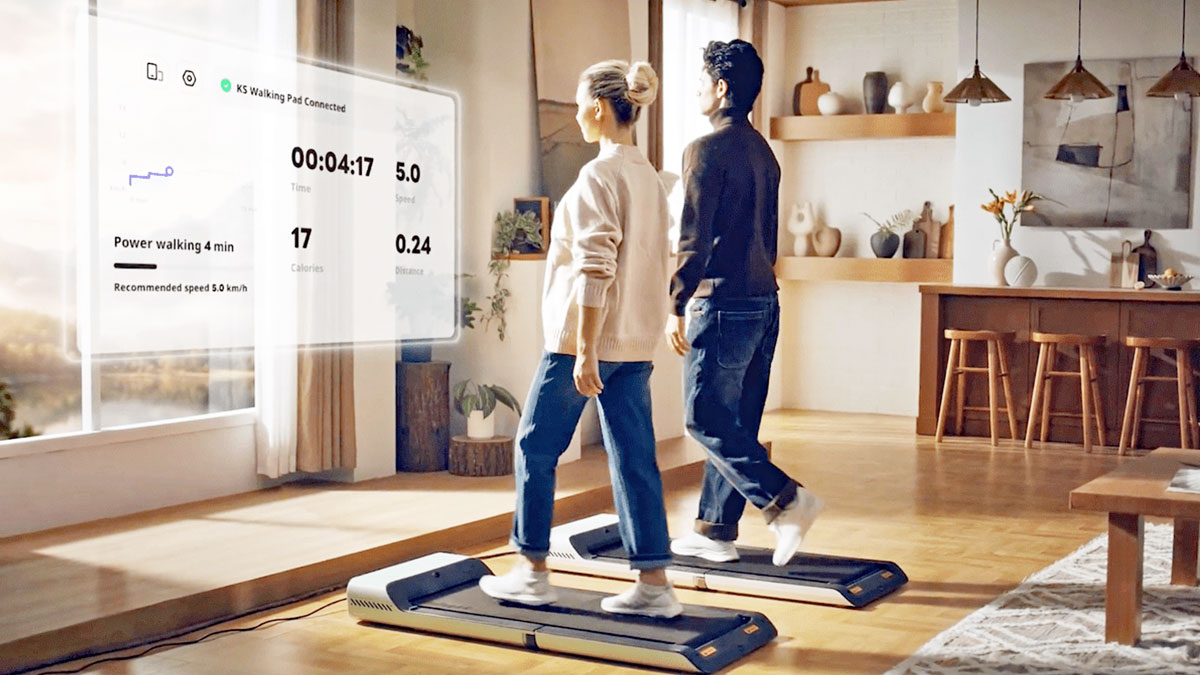
The greatest obstacle to regular walking is often not motivation but convenience. Work schedules, winter weather, early darkness and family commitments can make outdoor exercise difficult to maintain consistently. This is where a compact walking treadmill becomes particularly useful. The foldable WalkingCase, developed by KingSmith WalkingPad, offers a speed range of up to 4 mph, allowing users to progress from relaxed walking to a more demanding pace without leaving home. Its suitcase-inspired folding design, telescopic handle and multidirectional wheels make it easier to move between rooms, while the compact folded dimensions allow storage in spaces where a conventional treadmill would be impractical.
Rather than requiring a dedicated exercise room, it offers a way to make walking part of an existing daily routine. The most important advantage is not a technical specification, but the opportunity to remove obstacles that repeatedly prevent people from being active.
What Happens When You Walk at 4 mph?
Four miles per hour is approximately 6.4 kilometers per hour, a purposeful pace that many people would describe as fast walking. At that speed, a 30-minute session covers about two miles. Depending on individual fitness, it may represent moderate or relatively vigorous effort. Regular brisk walking can improve aerobic capacity and endurance, help manage blood pressure and increase daily energy expenditure. The muscles of the legs and hips work continuously, while the heart and lungs respond to the sustained oxygen demand. However, maximum speed is not necessarily the best training speed. Someone returning to exercise after a prolonged break may find 2 or 2.5 mph entirely sufficient, while a well-conditioned walker may benefit from gradually approaching the upper end of the range. The correct intensity is the one that provides a useful challenge without compromising comfort, balance or consistency.
A Short Walk After Eating Can Support Blood Sugar Control
One of walking's most practical benefits concerns glucose regulation. After a meal, blood glucose typically rises as nutrients enter the bloodstream. When muscles contract during physical activity, they can increase glucose uptake, helping reduce the rise in blood sugar after eating. Research published in Sports Medicine has found that exercise after meals can improve short-term post-meal glucose responses compared with remaining inactive or exercising before eating.
This creates a straightforward opportunity for people who spend much of their day sitting. A comfortable 10- to 20-minute walk after lunch or dinner can add movement while supporting metabolic health. The pace does not need to be maximal, and a short indoor session can be particularly convenient when outdoor conditions are unfavorable. For people with diabetes who use glucose-lowering medication, exercise plans may require individualized advice.
The Benefits Go Beyond Counting Steps
Walking is often promoted primarily as a weight-loss strategy, but its potential benefits extend far beyond calorie expenditure. Regular aerobic activity supports cardiovascular fitness, may improve sleep quality and can contribute to better mood and stress management. It also increases the amount of time spent moving instead of sitting, an important consideration for people whose occupations involve prolonged desk work. The cumulative effect matters more than an occasional exceptionally long session. Someone who walks for 25 minutes on most days develops a consistent physical activity habit that can be maintained and gradually expanded.
Fitness.com has also explored the health benefits of treadmill walking, including how indoor exercise can improve accessibility and help people maintain a routine in its article about treadmill exercise. The underlying principle remains the same regardless of location: regular movement provides the body with repeated opportunities to adapt.
Thirty Minutes Can Be a Meaningful Training Session
Current US physical activity guidance recommends at least 150 minutes of moderate-intensity aerobic activity per week for most adults, along with muscle-strengthening activities on at least two days. Thirty minutes of brisk walking on five days meets the aerobic time recommendation when the effort is genuinely moderate. That is a more flexible framework than demanding exactly 10,000 steps every single day. Someone may walk more slowly on one day, increase the pace on another, or divide activity into shorter sessions. A practical indoor routine might begin with five minutes at a comfortable pace, continue with 15 to 20 minutes of brisk walking, and finish with a slower cooldown. As endurance improves, the duration or speed can be increased gradually. This approach allows exercise to be adapted to different levels of fitness while maintaining a clear weekly goal.
Breaking Up a Sedentary Workday
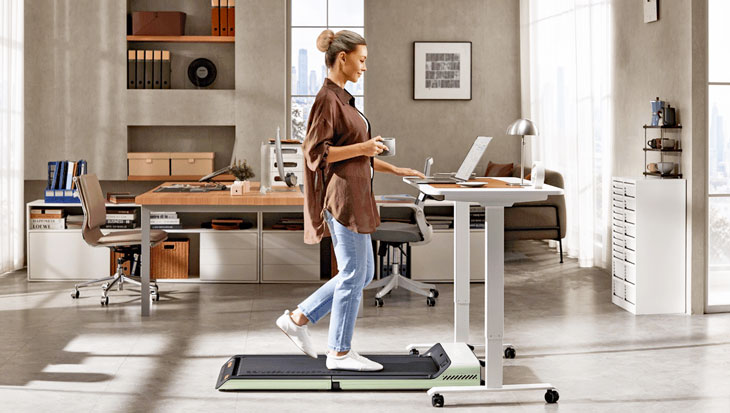
A full workout is valuable, but it does not eliminate the importance of movement during the remaining hours of the day. Prolonged sitting can dominate modern working life, particularly for people who spend hours in front of a computer. Short walking breaks provide opportunities to interrupt that pattern and increase overall activity. Walking at a slow, comfortable pace may be practical during certain phone calls, online meetings or tasks that require relatively little typing. Faster walking, however, is better reserved for dedicated exercise sessions where concentration and balance are not divided between movement and demanding work. A compact walking treadmill offers flexibility because users can choose between gentle movement breaks and more purposeful sessions. The objective is not to transform every office activity into a workout. It is to make inactivity less automatic.
Walking Supports Healthy Aging, but Strength Still Matters
The health benefits of walking become particularly relevant with advancing age. Regular aerobic activity supports endurance and the ability to carry out everyday tasks, while maintaining mobility can help people remain physically independent. Walking is also accessible to individuals who may find higher-impact exercise uncomfortable or unnecessarily demanding. However, walking alone cannot provide every adaptation the body needs. Preserving muscle strength requires resistance-based exercise, particularly as people grow older.
A well-rounded fitness routine therefore combines regular walking with exercises that challenge major muscle groups. That might mean walking on most days and completing two or three strength sessions each week. The activities complement rather than compete with each other: walking improves aerobic capacity and contributes to daily movement, while resistance training helps maintain the strength needed for lifting, carrying, climbing stairs and maintaining physical function.
Consistency Is the Real Advantage of Indoor Walking
One of the reasons people abandon exercise programs is that the routine becomes too complicated. A gym visit requires travel, outdoor walking depends partly on weather, and ambitious training plans can be difficult to sustain during busy periods. Having a walking option available at home reduces some of these barriers. A foldable treadmill illustrates this practical advantage: it can be unfolded for a session and stored again without permanently occupying a large area.
A morning walk before work, a short session after dinner or a longer walk while listening to a podcast can become a predictable part of the day. Portability is an additional convenience for households that cannot dedicate one room exclusively to exercise equipment. The benefit comes from what the equipment enables: frequent, manageable sessions that people are more likely to repeat.
Stop Chasing a Number and Start Building a Habit
The 10,000-step target is not useless. For people who enjoy tracking daily activity, it can remain a motivating personal goal. But it should not become a rigid measure of health or fitness success. The evidence suggests that benefits begin at lower activity levels, and walking intensity adds another important dimension.
A person who increases daily movement from very little to a consistent 20 or 30 minutes of purposeful walking is making meaningful progress, even without reaching 10,000 steps. A compact walking treadmill can make that progress easier by offering a convenient alternative when outdoor walking is impractical. The most effective walking routine is ultimately not the one that generates the most impressive number on a screen. It is the one that challenges the body appropriately, fits into everyday life and continues long after the initial enthusiasm has faded.
0 Comments
Log in to join the discussion.